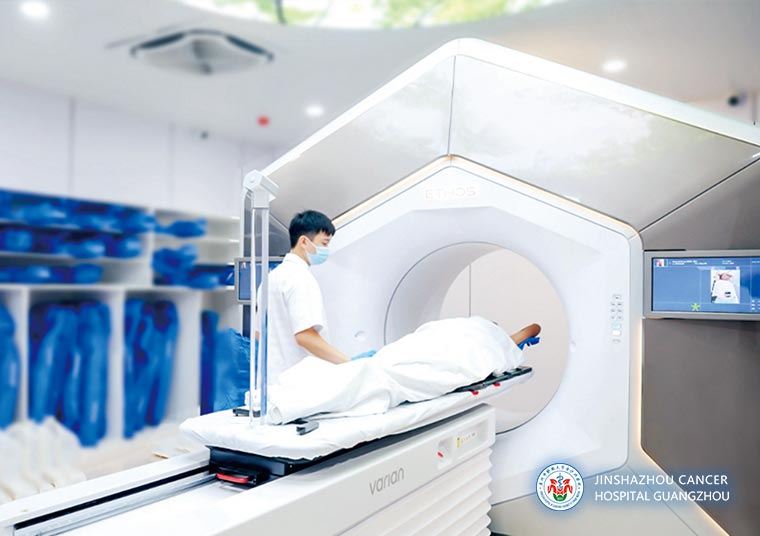
Ethos AI Adaptive Radiotherapy
Applicable situations
① Typical scenarios more suitable for Ethos
• Tumors with easily changing positions or sensitive surrounding organs.
• Cases where organs at risk are close to the tumor and high protection of normal tissues is required.
• Tumors with position variability (tumor position or shape frequently changes during treatment due to respiration, organ motion, or patient positioning).
• Tumors with dynamic shape or size changes (tumor may change shape or size due to treatment response or physiological variations).
② Common indications
Ethos adaptive radiotherapy is suitable for clinical treatment of various common malignant tumors, including cervical cancer, bladder cancer, head and neck tumors, lung cancer, prostate cancer, esophageal cancer, breast cancer, and rectal cancer.
Core Advantages
① Precision: Online adaptive therapy tailored to daily anatomy
The core of Ethos lies in online adaptive radiotherapy. It is not just "position verification" but "replanning for the day" to better match the tumor location. Before each treatment, patient positioning images are acquired; based on the tumor's position, size, and shape on that day, the target volume is updated and the daily dose is recalculated. Treatment plans can be adjusted online if necessary, ensuring each session conforms closely to the patient's current anatomy.
② Intelligence: AI-guided workflow with automatic contouring and assessment
Ethos is the world's first AI-based online adaptive radiotherapy system. AI guides the workflow using multimodal high-resolution imaging. On the treatment day, the system can automatically identify and contour organs at risk related to the target, map and update both target and OARs on the day's images, and allow physicians and physicists to check and adjust only at critical points. The system then quickly generates the daily plan, proceeding to evaluation and execution, forming a fully implementable online workflow: image acquisition → contouring & assessment → plan generation → plan quality control → plan delivery.
③ Efficiency: ~15-minute online adaptive workflow
Compared with conventional linear accelerators, Ethos's online adaptive mode can acquire high-resolution iCBCT images, perform AI-based evaluation, automatically adjust and recalculate the daily dose---all within approximately 15 minutes. Traditional offline adaptive workflows often required 2--3 days. Moving adaptation to the same day online reduces repeated offline procedures and waiting, making the workflow more efficient and controllable, giving cancer patients more valuable treatment time.
④ Pelvic advantage: minimizing impact of filling fluctuations
For prostate and bladder cancer treatments, Ethos allows clinicians to monitor bladder filling and bowel status (gas, contents) and perform daily assessment and online adjustment. This reduces repeated preparation to meet fixed requirements, making the workflow more patient-friendly and experience more controllable.
Why Choose Jinshazhou Hospital of Guangzhou University of Chinese Medicine?
Our Ethos system was installed in September 2022, obtained the Radiation Therapy License on April 7, 2023, and completed its first adaptive radiotherapy case on April 16, 2023. Regarding the clinical implementation of online adaptive radiotherapy, our hospital has established standardized team collaboration and workflow processes to provide consistent treatment services. The value of Ethos lies not only in its advanced platform but also in its capability to evaluate tumor and organ changes based on daily imaging before each treatment, and, if necessary, quickly adjust and verify the plan for the day, ensuring treatment conforms closely to the patient's anatomy. It is particularly suitable for pelvic tumors such as bladder cancer and cervical cancer, which are significantly affected by bladder filling and bowel status.
The full potential of Ethos in our hospital is supported by our one-stop oncology care system and MDT multidisciplinary collaboration mechanism. Radiotherapy is not an isolated process but integrated with imaging diagnosis, pathological evaluation, interventional and systemic therapy, traditional Chinese medicine rehabilitation, and follow-up management within the same framework for coordinated decision-making and dynamic assessment. This allows patients to complete a continuous care pathway from evaluation to treatment to management and ensures that advanced technologies like Ethos online adaptive radiotherapy---demanding in workflow, quality control, and team coordination---can achieve a stable balance between safety and efficiency.
For overseas patients, this means that advanced technology is not only "available" but also "accessible and executable." Our hospital will continue to promote the standardized application and quality management of Ethos online adaptive radiotherapy, transforming its technical advantages into a one-stop care experience with long-term follow-up support, providing patients with a more precise, safer, and comfortable radiotherapy process.
Technical Definition
The Ethos system introduced at our hospital is the world's first AI-based online adaptive radiotherapy platform. Built upon a conventional linear accelerator, it integrates artificial intelligence, multimodal high-resolution imaging, efficient image acquisition, and an online quality control system to deliver highly efficient online adaptive radiotherapy.
Mechanism of Action / Working Principle
The core mechanism of Ethos online adaptive radiotherapy integrates "daily imaging---structure updating---plan generation and verification---dose delivery" into a single online closed loop, allowing treatment to better conform to the patient's anatomy on the day of each session. Key components include:
① Real-time image guidance: Before each treatment, three-dimensional images in the treatment position are acquired to clearly show the tumor and surrounding organs' positions on that day. Position verification is performed before irradiation, and, if necessary, intra-procedural review images are used to reduce errors caused by small patient movements or organ changes, ensuring the radiation accurately conforms to the current anatomy.
② Dynamic intensity modulation: Based on the planned beam paths and dose constraints, intensity modulation allows precise shaping of the dose. If tumor shape or adjacent organ positions change, the dose distribution can be recalculated or re-optimized according to the daily anatomy, ensuring target coverage while minimizing unnecessary exposure to surrounding healthy tissue.
③ AI-assisted optimization: Under AI guidance, the system automatically identifies and delineates critical structures, standardizing the evaluation, plan generation, optimization, and online verification processes. Rapid calculation and optimization reduce adaptive turnaround time, minimize manual repetition and inter-operator variability, and ensure that online adaptive radiotherapy can be consistently implemented within the clinical workflow.
Treatment Procedure
The physician evaluates whether the patient is suitable for Ethos AI adaptive radiotherapy, completes positioning scans and immobilization, establishes a baseline reference plan, and initiates the treatment course.
The specific workflow may be adjusted by the radiotherapy team based on the patient's condition, tumor location, and daily status.
After the course, follow-up visits and efficacy assessments are conducted according to medical instructions, and the healthcare team manages side effects, provides rehabilitation guidance, and coordinates any necessary subsequent comprehensive treatment.
Each treatment session follows these steps:
① Daily Imaging Acquisition: After the patient is positioned on the treatment machine, a CBCT scan is performed to capture the tumor and surrounding organs' status for that day.
② AI Online Adaptive Planning and Review: AI assists in updating the target volume and critical organ structures. The radiotherapy team quickly reviews and, if necessary, adjusts these structures.
③ Plan Generation: The system generates the treatment plan for the session, including the AI-optimized adaptive plan. The radiotherapy team evaluates and selects the plan for execution.
④ Online Verification and Position Calibration: After completing online verification, a second CBCT scan is performed before irradiation to further correct patient positioning and reduce deviations caused by movement.
⑤ Treatment Delivery: The planned irradiation is performed, repeating according to the prescribed course. If anatomical changes occur on the treatment day, online adaptive adjustments are made as needed.
Frequently Asked Questions
① How soon can normal daily life be resumed after treatment?
Answer: Most patients are able to maintain basic daily activities during radiotherapy, and after completion, normal routines can usually be gradually resumed within a short period. It is recommended to progress according to personal tolerance, avoiding immediate intense exercise or heavy physical labor. Specific guidance should follow the physician's advice.
② Is bladder filling still required before radiotherapy?
Answer: Moderate, repeatable bladder preparation is generally still required according to medical instructions, but it is usually not necessary to achieve a strict fixed level as in traditional protocols. Ethos can assess the bladder and bowel status on the day of treatment and make online adaptive adjustments if needed, reducing the impact of volume fluctuations on treatment accuracy and organ protection. Individualized instructions from the physician should be followed.
③ Is imaging required before each treatment? Does it increase radiation exposure?
Answer: Ethos performs imaging before every treatment session. Although imaging contributes some radiation dose, it remains within regulated safety limits. For most patients, the benefits of precise targeting and organ protection outweigh the potential risk. There is no need for excessive concern, and patients should follow medical instructions.
④ What should be done if discomfort or side effects occur during treatment?
Answer: The severity of radiotherapy side effects varies among individuals, and most side effects gradually subside after treatment. If side effects occur, patients should promptly communicate with their physician, who can adjust the treatment plan or provide symptomatic care as appropriate. Maintaining a positive attitude and cooperating with treatment helps minimize the impact of side effects on daily life.
Typical Case
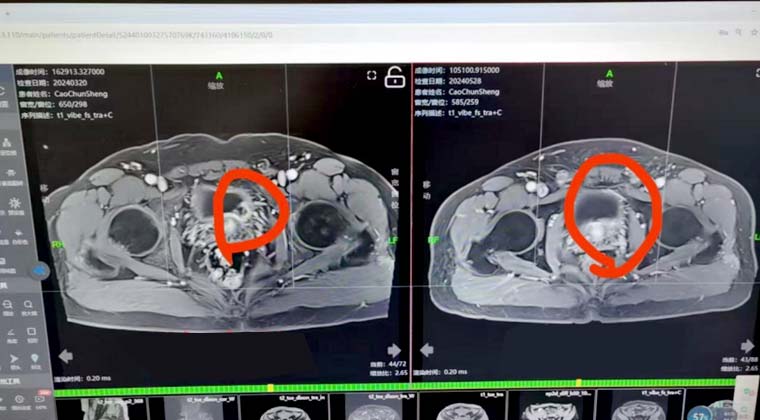
① Case 1:
Male patient, 54 years old
Malignant bladder tumor
In February 2024, the patient experienced gross hematuria with frequent, urgent, and painful urination. Local hospital examination confirmed a malignant bladder tumor, pathology indicated high-grade urothelial carcinoma. Surgery was recommended, but the patient refused.
From March 21 to April 25, 2024, he received concurrent precise radiotherapy for the bladder tumor combined with local hyperthermia at our hospital. Follow-up examinations after treatment show no recurrence to date.
Left image: before treatment
Right image: after treatment
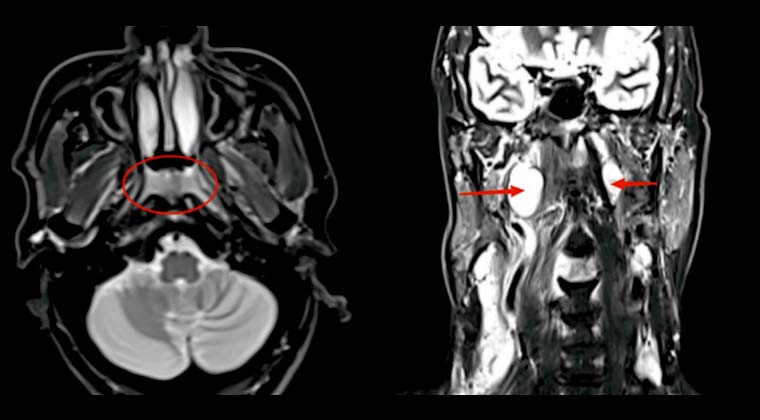
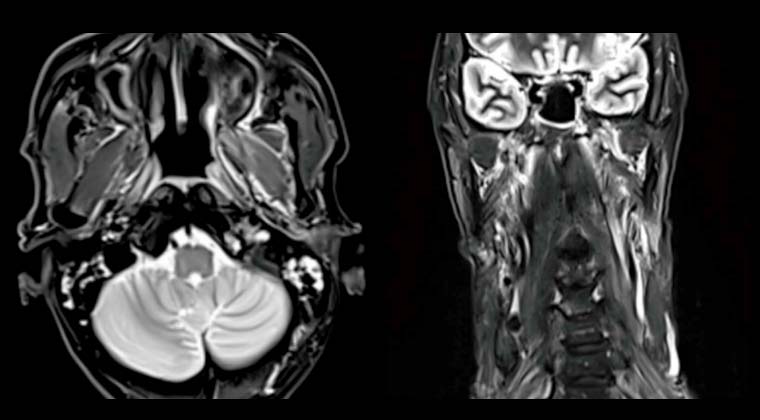
② Case 2:
Male patient, 55 years old
Nasopharyngeal malignant tumor (nasopharyngeal non-keratinizing undifferentiated carcinoma)
Symptoms: neck discomfort, mainly pain
Prescribed dose: PGTVnx 70.29 Gy/2.13 Gy/33F, PGTVnd 67.98 Gy/2.06 Gy/33F, PTV1 62.04 Gy/1.88 Gy/33F, PTV2 54.12 Gy/1.64 Gy/33F
Eight months after treatment, follow-up MR imaging showed reduction of the nasopharyngeal mass and positive lymph nodes, with improvement of nasopharyngeal mucosal thickening.
Before Treatment:
After Treatment:
③ Case 3:
Male patient, 67 years old
Diagnosis: Bladder cancer
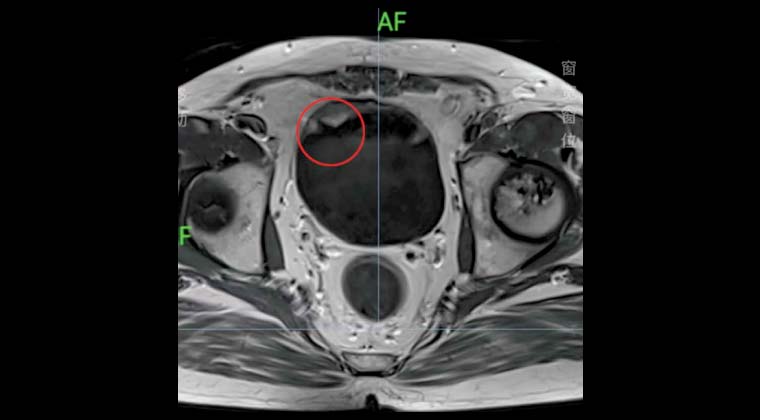
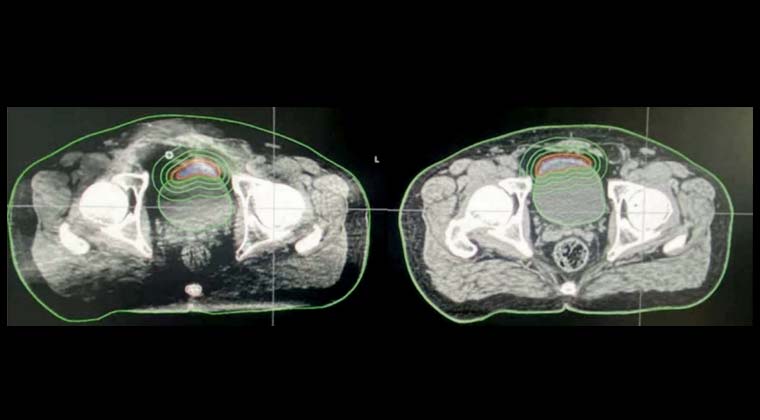
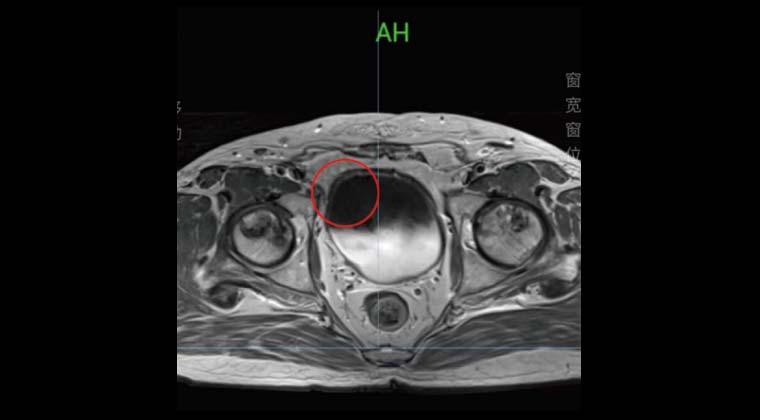
Treatment challenge: Tumor position changes with bladder filling, high variability between sessions
Advantage of Ethos online adaptive radiotherapy: Before each session, iCBCT imaging is used to capture the real-time position of the bladder and tumor. The target volume is then re-contoured, and the treatment plan is re-optimized, making the therapy more precise.
Images: Pre-treatment MRI, post-treatment MRI, target contouring during Ethos adaptive radiotherapy:
Before Treatment:
During Treatment:
After Treatment:
 + 86 17688273501
 Address
 Email Form
 Language
 English

 Hotline Phone+ 86 17688273501

 Back to Menu