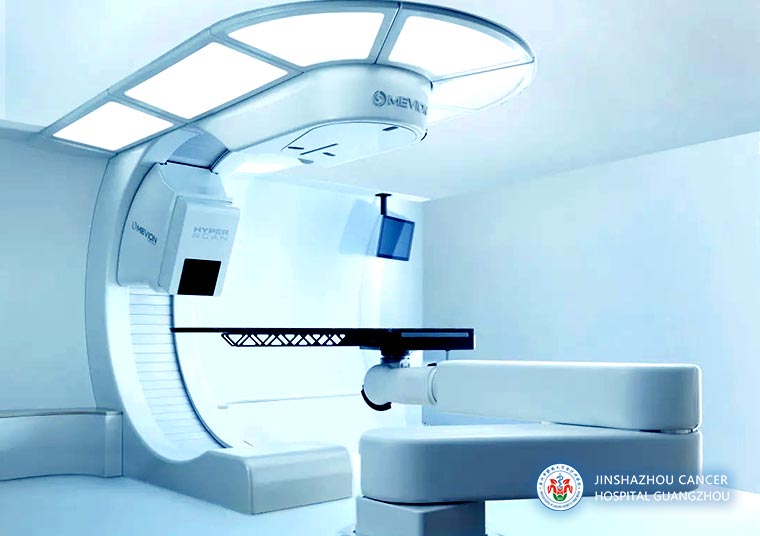
Proton Therapy
Applicable Situations
① Classic scenarios more suitable for proton therapy
• Patients with tumor recurrence who previously underwent radiotherapy and have limited tolerance of normal tissues.
• Tumors located in complex or sensitive anatomical regions.
• Pediatric and adolescent tumor patients.
• Cases requiring cumulative dose control, such as re-irradiation.
② Common indications
• Head and neck: chordoma, nasopharyngeal carcinoma, sinus/nasal cavity carcinoma, oropharyngeal carcinoma, acoustic neuroma, etc.
• Central nervous system: glioma, meningioma, pituitary tumor, arteriovenous malformation, etc.
• Thorax: lung cancer, mediastinal tumors, thymoma, esophageal carcinoma, etc.
• Ocular lesions, ocular melanoma.
• Breast cancer.
• Abdomen: liver cancer, gastric cancer, pancreatic cancer, spinal and retroperitoneal sarcomas, etc.
• Pelvis: prostate cancer, rectal cancer, cervical cancer, bladder cancer, etc.
• Pediatric tumors: brain tumors, ocular tumors, spinal tumors, neuroblastoma, Hodgkin lymphoma, sarcomas, second primary malignancies (SPM), and secondary malignant neoplasms (SMN), etc.
• Other tumors: lymphoma, secondary malignant neoplasms, cutaneous malignancies, sarcomas, etc.
Technical Advantages
① Protection of critical organs: reducing unnecessary exposure and making safety more controllable
Proton beams exhibit Bragg peak dose distribution, concentrating energy within the target while rapidly decreasing dose beyond it. Compared with conventional photon therapy, this helps reduce irradiation of non-target tissues and overall integral dose, making dose control for critical structures such as the heart, lungs, spinal cord, and optic nerves more precise and controllable.
② Finer dose distribution: better conformity and control for complex lesions
The MEVION S250i system used in our hospital employs ultra-fast pencil beam scanning (PBS), delivering dose point by point and layer by layer. This allows dose distribution to closely conform to tumor shape. For lesions with irregular shape, complex extent, or proximity to critical organs, this approach facilitates precise target coverage and boundary control.
③ More controllable management of side effects: improving tolerance and patient experience
Radiation-related reactions can affect quality of life during treatment. Because non-target tissue exposure is more controlled, proton therapy can help reduce irritation to surrounding normal tissues in some patients, allowing better management of side effects and enabling patients to complete treatment courses more comfortably.
④ Pediatric/adolescent patients: prioritizing growth, development, and long-term health
For children and adolescents, radiotherapy must control the tumor while minimizing impact on growth and development-related organs. Proton therapy, by reducing exposure of non-target tissues, is often considered a key option in pediatric/adolescent radiotherapy planning, especially when organ protection and long-term management are critical.
⑤ Greater planning optimization flexibility
When the target is adjacent to critical organs, photon therapy may be limited by organ tolerance constraints. Proton therapy, with more controllable non-target exposure, provides radiotherapy teams greater flexibility in plan optimization---maximizing tumor coverage while strictly adhering to safety constraints.
⑥ Integration into MDT comprehensive treatment pathways
Proton therapy can be coordinated with surgery, interventional procedures, and systemic therapies including chemotherapy, targeted therapy, and immunotherapy, serving as a localized treatment component within an overall integrated treatment strategy.
Why choose Jinshazhou Hospital of Guangzhou University of Chinese Medicine?
Proton therapy is one of the most advanced particle beam radiotherapy technologies, with high requirements for equipment construction, regulatory approval, and operational management. Our hospital successfully obtained approval from the National Health Commission in 2024 to equip a proton therapy system and is currently constructing the MEVION S250i ultra-fast pencil beam scanning proton radiotherapy system, planned for clinical use in 2026.
Globally, the overall accessibility of proton therapy remains relatively limited due to technological, regulatory, and cost constraints. Leveraging a well-established radiotherapy platform, standardized quality control system, and MDT collaboration mechanism, our hospital is advancing the construction of a proton therapy system, becoming one of the few medical institutions in South China with proton therapy capability.
In response to the growing trend of global patient mobility and cross-border medical demand, our hospital will focus on standardized procedures, verifiable quality management, and multidisciplinary collaboration to gradually enhance the accessibility and coverage of advanced radiotherapy resources. The goal is to ensure that cutting-edge technology is consistently translated into tangible safety and treatment experience benefits for patients, providing them with more options for care.
Technical Definition
Proton therapy is an advanced radiotherapy technology that uses proton beams to irradiate tumors with high precision. Unlike conventional X-ray radiotherapy, protons have unique physical properties: they release very little energy while passing through normal tissues, but deposit a concentrated dose of energy upon reaching the tumor target (the Bragg peak), enabling precise "spot-specific destruction" of the tumor. Due to reduced damage to surrounding healthy tissues, proton therapy offers significant advantages for treating deep-seated tumors, tumors near critical organs, and pediatric cancers.
Working Mechanism
① Biological Mechanism: Inhibiting Tumor Growth through DNA Damage
Proton therapy, like other forms of radiotherapy, primarily exerts its effect by ionization, directly or indirectly causing DNA damage in tumor cells. This can result in strand breaks and base damage, which are further amplified by free radicals. If the cell cannot repair this damage, it may undergo cell cycle arrest, apoptosis, or lose its proliferative ability, thereby inhibiting tumor growth. Normal tissues may also be affected, so precise targeting, dose constraints, and comprehensive quality control are essential for safety.
② Bragg Peak: Concentrated Dose, Reduced Exposure to Non-Target Tissue
Protons release most of their energy near a specific depth in tissue (the Bragg peak), after which the dose rapidly falls off. Clinically, by adjusting beam energy and planning parameters, the dose can be concentrated on the tumor target while minimizing exposure to tissues along the beam path and beyond the target. This provides space for protecting critical organs and managing long-term dose exposure.
③ Pencil Beam Scanning: Point-by-Point, Layer-by-Layer Precision Delivery
The MEVION S250i uses HYPERSCAN ultra-high-speed pencil beam scanning, an advanced implementation of intensity-modulated proton therapy (IMPT). The system divides the proton beam into fine beamlets that scan the target point by point and layer by layer to form a three-dimensional dose distribution. This method allows more precise and controllable dose coverage for tumors with irregular shapes, complex volumes, or proximity to critical organs.
④ Adaptive Aperture: Sharper Dose Boundaries
The MEVION S250i features Adaptive Aperture technology, which uses a multi-leaf collimator to dynamically shape the beam edges, making the radiation field more closely match the tumor projection. During delivery at different layers or angles, the beam shape can be adjusted according to the plan, further optimizing dose control at target edges and reducing unnecessary spillover.
Treatment Procedure
① Assessment and Indication Confirmation: Using imaging and MDT consultation, evaluate indications and contraindications, determine suitability for proton therapy, and develop a personalized treatment plan.
② Simulation and Positioning: Customize personalized immobilization devices; position the patient with the device and perform imaging scans.
③ Treatment Planning and Verification: The physician precisely delineates the tumor target and organs at risk on the images. The physicist optimizes the dose distribution based on pencil beam scanning and energy layering parameters, completing the plan. Prior to treatment, the plan undergoes rigorous verification.
④ Repositioning, Image Alignment, and Proton Beam Delivery: Treatment is delivered in multiple fractions according to the schedule. Before each session, the patient is repositioned to the planned setup, imaging is performed and compared with the reference images, fine adjustments are made if necessary, and the proton beam is delivered.
⑤ Follow-Up and Long-Term Management: After the course is completed, regular follow-up evaluations are conducted to assess treatment effectiveness and monitor ongoing recovery.
Frequently Asked Questions
① Does proton therapy hurt? Is anesthesia or surgery required?
Answer: Proton therapy is generally non-invasive and usually does not require anesthesia or surgical incisions. The treatment process is mostly painless, though some patients may experience mild discomfort depending on the treatment site and individual tolerance.
② What are the side effects? Are they milder than conventional radiotherapy?
Answer: Possible side effects include fatigue, skin or mucosal reactions in the treated area, and localized hair loss. These usually develop gradually over the course of treatment and can be managed symptomatically. Because normal tissue exposure is more controlled, some patients may experience milder reactions, though this varies individually.
③ How long does the treatment take?
Answer: A single session typically lasts several minutes. Including patient positioning and image verification, each session usually takes 15-60 minutes, depending on the treatment site and procedure. Courses are usually delivered multiple times per week over several weeks. The physician will discuss the schedule and objectives with the patient and their family.
④ Will the patient be "radioactive" after proton therapy?
Answer: No. Proton therapy is an external beam treatment; the proton beam only affects the body during treatment. After the session, no radioactivity remains in the body, and there is no radiation risk to family members or others. Patients can safely resume normal contact and daily life immediately.
⑤ Does proton therapy have a higher cure rate?
Answer: Not necessarily. Proton therapy is one option in comprehensive cancer treatment. Its main advantage is reducing exposure to healthy tissues and lowering certain side effect risks. Cure rates depend on cancer stage, patient condition, treatment plan, and other factors, and must be evaluated individually by a physician.
 + 86 17688273501
 Address
 Email Form
 Language
 English

 Hotline Phone+ 86 17688273501

 Back to Menu