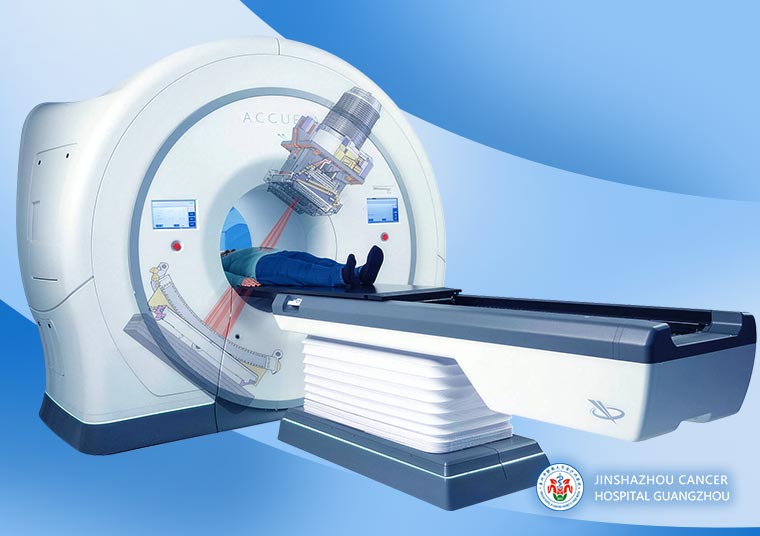
TOMO helical tomotherapy
Indications
① Applicable situations most suitable for TOMO
• Long target areas or need for extensive continuous coverage: such as total marrow irradiation, total pleural irradiation, scalp, and other long or large target areas.
• Coordinated treatment of multiple targets within the same course: for multiple lesions or several metastatic sites requiring synchronized planning and radiotherapy delivery within a single treatment course.
• Complex anatomical structures with densely packed critical organs, where functional preservation is highly required.
② Common indications
• Intracranial tumors: pituitary adenoma, vestibular schwannoma (acoustic neuroma), meningioma, vascular lesions, etc.
• Common primary tumors: liver cancer, lung cancer, pancreatic cancer, pelvic tumors, etc.
• Complex head and neck tumors: salivary glands, and tumors in the ear region, orbit, oral cavity, tongue, pharynx, etc.
• Hematologic system--related lesions: leukemia, malignant lymphoma, etc.
• Others: total marrow irradiation, scalp radiotherapy, total pleural irradiation; metastatic lesions radiotherapy, such as bone metastases, lung/liver metastases, or multiple lesions.
Core Advantages
① Simultaneous Multi-Target Irradiation Within a Single Treatment Course
For patients with multiple lesions or multiple targets requiring radiotherapy, TOMO allows coordinated irradiation of several targets within the same treatment course. This reduces the need for repeated scheduling of segmented treatments, simplifies treatment logistics, and enables better organ protection at the planning stage.
② Omnidirectional Irradiation for Precise Dose Distribution
TOMO enables 360° helical irradiation, delivering radiation from multiple angles along a spiral trajectory. This allows the dose distribution to conform closely to complex target shapes, facilitating coverage of irregular or elongated targets while precisely sparing surrounding critical organs, reducing side effects and maximizing treatment effectiveness.
③ Fine Intensity Modulation for Enhanced Organ Protection
TOMO uses a binary pneumatic multileaf collimator with high-speed switching capability (e.g., at the 20 ms level), allowing fine intensity modulation during treatment. This enables accurate dose allocation, ensuring sufficient tumor dose while effectively protecting surrounding normal tissues, reducing radiotherapy-related toxicity, and improving patient tolerance.
④ Integrated Image Guidance for Reliable Positioning
TOMO employs an imaging system derived from the same source as CT imaging, enabling in-room image verification and registration prior to treatment. This allows more accurate confirmation of tumor position and ensures that irradiation closely matches the treatment plan.
⑤ Verifiable Workflow for Safer Treatment Delivery
Based on integrated imaging and standardized system workflows, key steps of treatment delivery can be verified and cross-checked. This reduces the risk of discrepancies between treatment planning and execution, making the treatment process more controllable and reliable.
Why Choose Jinshazhou Hospital?
The equipment platform provides the hardware foundation, but treatment quality depends more on the experience of the expert team, the professional support of the radiotherapy staff, and standardized clinical workflows and quality control management. At our hospital, TOMO is not just a piece of equipment; it represents our ability to carry out complex radiotherapy safely and reliably.
TOMO treatment is integrated into the hospital's MDT decision-making: first, the role and timing of radiotherapy within the comprehensive treatment plan are clarified, ensuring smooth coordination with surgery, interventional procedures, and systemic therapies. The radiotherapy team then performs image evaluation, target delineation, dosimetric analysis, and fractionation planning. For cases requiring long-target irradiation, large-field coverage, or simultaneous multi-target treatment---situations that demand careful planning and organ protection---we design the plan with detailed protection requirements and fractionation schedules to fully leverage TOMO's fine intensity-modulation capabilities in complex scenarios.
In terms of treatment delivery, the hospital implements standardized quality control procedures, including in-room image verification before treatment, plan review and verification of key steps, and dose verification before executing intensity-modulated plans. During treatment, image-based corrections and process monitoring are performed, and strategies are adjusted as necessary. Post-treatment follow-up and evaluation are carried out according to the follow-up schedule. Ultimately, our focus is not merely on which machine is used, but on applying standardized procedures to ensure that the technological advantages consistently translate into tangible patient benefits.
Technical Definition
The TOMO helical tomotherapy system introduced at our hospital integrates IMRT (Intensity-Modulated Radiotherapy), IGRT (Image-Guided Intensity-Modulated Radiotherapy), and DGRT (Dose-Guided Intensity-Modulated Radiotherapy) into a single platform. Its innovative design perfectly combines a linear accelerator with helical CT, overcoming many limitations of conventional accelerators. Under CT guidance, it delivers 360° focused tomographic irradiation to tumors, providing efficient and precise treatment for patients with malignant tumors.
Mechanism of Action / Working Principle
① Effect of Radiation on Tumors
TOMO uses a linear accelerator to generate high-energy X-rays. The radiation deposits dose within the target area, causing damage to the DNA of tumor cells, thereby affecting their replication and proliferation to achieve therapeutic effects.
② Helical Tomotherapy
The linear accelerator is mounted on a continuously rotating gantry. During treatment, the gantry rotates 360° while the treatment couch moves at a uniform speed. The radiation is delivered along a "helical path" around the patient, achieving continuous coverage of the target area.
③ Intensity-Modulated Radiotherapy (IMRT)
The system is equipped with a multileaf collimator (MLC) that can rapidly adjust the shape and intensity of the radiation beam. The treatment planning system calculates and optimizes the output parameters from different angles based on the three-dimensional relationship between the target area and surrounding normal organs, producing a dose distribution that meets the planning requirements.
④ Image-Guided Radiotherapy (IGRT)
TOMO uses megavoltage CT (MVCT) for real-time imaging. Before each treatment session, an MVCT scan is typically performed and registered with the treatment plan to calibrate the patient's position and target area for the day, reducing deviations caused by positioning differences.
Treatment Procedure
① Evaluation and Preparation: The radiation oncologist assesses the patient's suitability for TOMO therapy based on medical condition, imaging data, and physical status. Treatment goals and timing are determined, and, if necessary, discussed within an MDT to coordinate with surgery, interventional procedures, and systemic therapy.
② Simulation and Positioning: Patient positioning and immobilization are performed, followed by CT simulation. Enhanced CT or 4D-CT may be added if required.
③ Target Delineation and Planning: The physician delineates the tumor target and organs at risk, while the medical physicist optimizes dose distribution and parameters. The treatment plan is reviewed and approved before execution.
④ Treatment Delivery: Before each session, image verification and positioning correction are performed. Helical irradiation is delivered according to the approved plan. Treatment frequency and number of sessions are tailored to the individual patient.
⑤ Follow-up and Management: During and after radiotherapy, follow-up is conducted per medical instructions. The care team provides symptomatic management and lifestyle guidance as needed.
Frequently Asked Questions
① How long does each treatment session last, and what is the usual course?
Answer: Each TOMO treatment session usually lasts about 10--20 minutes. A full course generally consists of several sessions over a period of weeks, depending on tumor type, stage, and treatment goals. The doctor will tailor the plan to the individual patient and explain it in advance.
② Does TOMO treatment hurt?
Answer: TOMO treatment is generally painless. The procedure is non-invasive, and the patient simply lies quietly on the treatment couch while the machine rotates around them. Most patients do not feel discomfort, though some may experience minor discomfort due to positioning or breathing coordination.
③ Are there side effects, and how are they managed?
Answer: Mild fatigue, skin reactions, nausea, or throat discomfort may occur during treatment. These can usually be managed with rest, dietary adjustments, and according to medical advice. If symptoms worsen, persist, or are accompanied by fever or breathing difficulties, the treatment team should be contacted promptly.
④ Is hospitalization required, and how soon can normal activities be resumed?
Answer: Most patients can complete TOMO treatment on an outpatient basis. Hospitalization may be recommended for more complex cases, for closer monitoring during treatment, or when coordinating with other therapies. Many patients can perform light daily activities during treatment, and generally recover quickly afterward. Recovery time may vary depending on fatigue or local reactions.
Typical Case
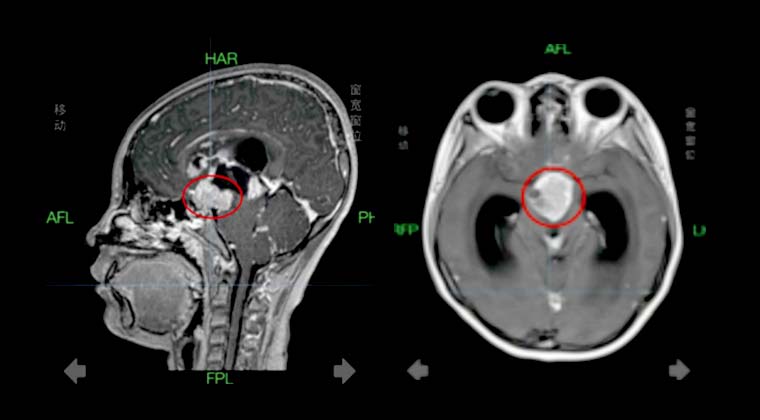
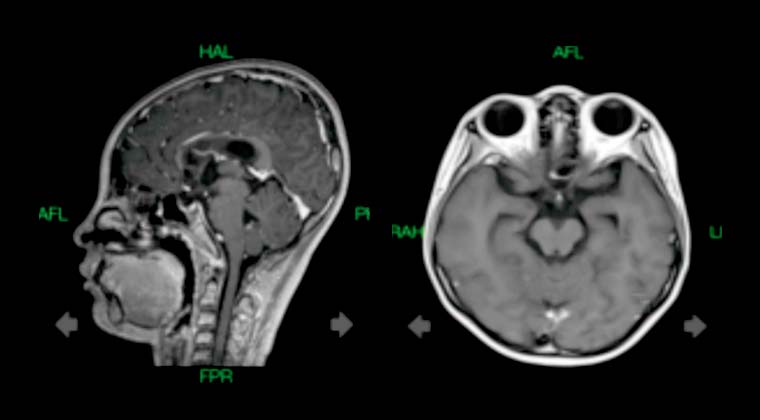
① Case 1:
Patient: Female, 16 years old
Diagnosis: Malignant brain tumor (Intracranial germ cell tumor, WHO Grade IV)
Symptoms: Intermittent dizziness, dry mouth, thirst, polyuria
TOMO radiotherapy started on 2022-05-19
Radiation dose: PTV 45 Gy / 1.8 Gy per fraction / 25 fractions
Follow-up imaging 10 months later showed significant shrinkage of tumor lesions in the suprasellar and pineal regions compared to prior scans
Before Treatment:
After Treatment:
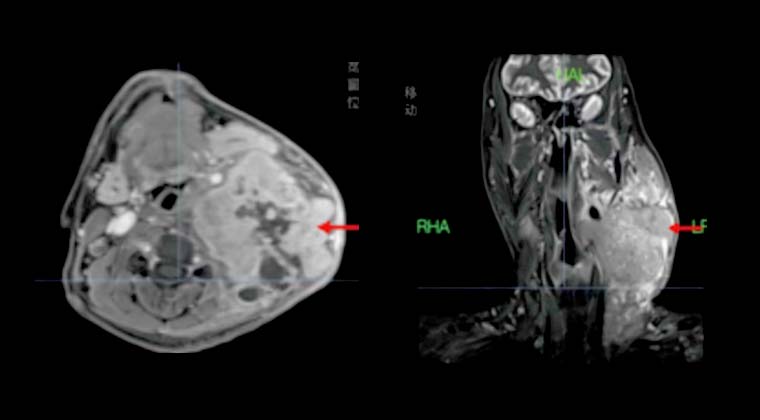
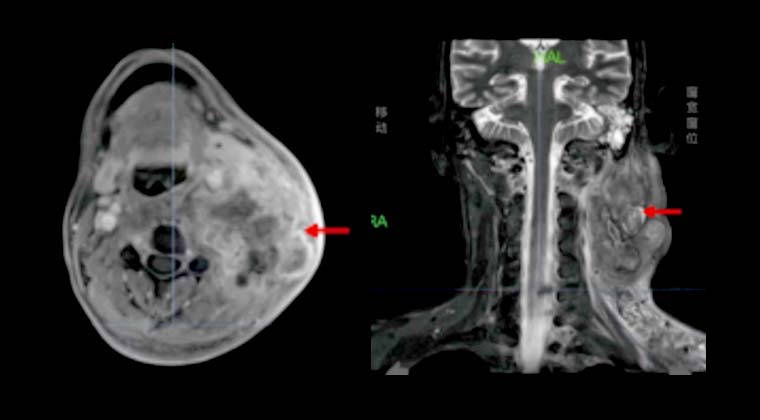
② Case 2:
Patient: Male, 47 years old
Diagnosis: Nasopharyngeal malignant tumor (differentiated non-keratinizing carcinoma of the nasopharynx, cT4N3M1, Stage IV)
Symptoms: Intermittent dizziness, dry mouth, polydipsia, polyuria
TOMO radiotherapy started on 2022-11-30
Radiation doses: PGTV 69.96 Gy / 2.12 Gy / 33 fractions, PTVn 66 Gy / 33 fractions, PTV 60 Gy / 33 fractions
Follow-up: Imaging at 3 months post-treatment showed significant reduction in the size and number of multiple cervical lymph node metastases.
Before Treatment:
After Treatment:
 + 86 17688273501
 Address
 Email Form
 Language
 English

 Hotline Phone+ 86 17688273501

 Back to Menu