Dications
① Applicable situations
• Patients requiring radiosensitization (e.g., head and neck tumors, breast cancer, soft tissue tumors)
• Patients requiring chemosensitization or with poor tolerance to chemotherapy
• Patients with deep-seated tumors, local recurrence, or multifocal metastases who are not suitable for surgery
• Postoperative patients at high risk of recurrence (to reduce the local recurrence rate)
• Patients with poor physical condition who are not suitable for major surgery
② Common indications
Hyperthermia is mainly used as part of comprehensive treatment. Its indications are relatively broad and it can be applied as an adjunctive therapy for various solid tumors; however, suitability must be strictly evaluated by specialists based on the patient's condition.
Its application may include:
· Recurrent or refractory head and neck tumors;
· Thoracic tumors: such as lung cancer, esophageal cancer, mediastinal tumors, pleural tumors, and malignant pleural effusion;
· Abdominal tumors: such as liver cancer, pancreatic cancer, gastric cancer, colorectal cancer, retroperitoneal tumors, and malignant ascites;
· Pelvic tumors: such as bladder cancer, prostate cancer, rectal cancer, cervical cancer, and ovarian cancer;
· Others: such as malignant lymphoma, selected bone and soft tissue tumors, and malignant melanoma;
· Palliative treatment for bone metastases;
· Adjuvant use to help prevent postoperative tumor recurrence and metastasis (in combination with other therapies).
Core Advantages
① Green therapy, non-invasive sensitization:
Hyperthermia acts on tumor regions through controlled, mild heating without surgery or puncture. It is non-invasive, safe, repeatable, and can serve as a long-term adjunct within comprehensive cancer treatment.
② Mature application with extensive international experience:
Hyperthermia has long been incorporated into multimodal treatment for various solid tumors, with substantial international clinical practice and research evidence accumulated. Its value is most often reflected in sensitization synergy and improved treatment tolerance, and it can be integrated into individualized treatment plans based on tumor type and therapeutic goals.
③ Typical value of hyperthermia-based "sensitization" combinations:
Clinical consensus: the greatest strength of hyperthermia lies not in standalone treatment, but in enhancing the efficacy of other therapies.
• Hyperthermia combined with intelligent, precision radiotherapy: addressing hypoxic cells and radioresistance
Radiotherapy is most effective against M-phase/G2-phase cells, while S-phase cells are most sensitive to heat.
Hyperthermia increases the radiosensitivity of hypoxic cells and inhibits repair of sublethal radiation-induced damage in tumor cells.
Combined treatment can significantly reduce the radiation dose required to achieve the same therapeutic effect (reduction of TCD50).
• Hyperthermia combined with chemotherapy: enhanced permeability, reversal of drug resistance, amplification of drug efficacy
Hyperthermia can improve the effectiveness of chemotherapy, reverse multidrug resistance in tumors, and reduce chemotherapy-related toxicity.
It is particularly suitable for patients with poor response to chemotherapy or those who have developed drug resistance.
• Hyperthermia combined with cryo--thermal ablation (Kangbo Knife): synergistic enhancement of two green physical therapies
The Kangbo Knife inactivates the primary tumor mass.
Hyperthermia further eliminates marginal tumor cells and enhances the efficacy of subsequent treatments.
Physical tumor inactivation combined with thermal sensitization: both are physical therapies with low toxicity, minimal trauma, and repeatability.
• Hyperthermia combined with surgery
Preoperatively, it can reduce tumor volume and increase resectability.
Postoperatively, it helps eradicate residual lesions, reduce recurrence risk, and improve local control rates.
• Hyperthermia combined with precision interventional therapy: strengthening local drug concentration and cytotoxic effect.
④ Improvement of microcirculation and immune status, promotion of recovery:
By improving local blood flow and tissue conditions, hyperthermia supports recovery and functional rehabilitation, thereby enhancing quality of life.
Why Choose Jinshazhou Hospital of Guangzhou University of Chinese Medicine?
Jinshazhou Hospital of Guangzhou University of Chinese Medicine possesses comprehensive strengths in the field of hyperthermia, characterized by an integrated model of advanced equipment platforms + standardized clinical pathways + multi-technology collaboration. As a National Demonstration Center for Oncological Hyperthermia, our hospital has long implemented standardized management and quality control for hyperthermia treatments, establishing a relatively mature system for precise temperature control and full-process monitoring.
We are equipped with multiple types of hyperthermia devices. Taking the sixth-generation BSD deep tumor hyperthermia system (the first of its kind in South China) as an example, unlike traditional whole-body or superficial heating methods, this system integrates imaging data to achieve conformal, targeted heating. It enables real-time monitoring and regulation of energy output, improving the controllability of heating in deep lesions while maximizing patient comfort during treatment.
More importantly, we incorporate hyperthermia into an MDT (multidisciplinary team) decision-making framework and apply it synergistically with intelligent precision radiotherapy, minimally invasive interventional therapies, ablation techniques, and systemic treatments such as chemotherapy, targeted therapy, and immunotherapy. Comprehensive evaluation and treatment planning are completed before therapy; tolerance and parameter adjustments are closely monitored during treatment; and post-treatment strategies are dynamically optimized based on follow-up results. This integrated "one-stop" platform allows patients to receive more continuous and comprehensive multidisciplinary care.
At the same time, we place strong emphasis on academic development and clinical translation in hyperthermia. For example, on January 10, 2026, our hospital hosted the First International Conference on Green Precision Cancer Therapy and the China Summit Forum on New Technologies in Green Cancer Treatment, jointly organized by the International Society of Clinical Oncology (ISCO) and the Chinese Anti-Cancer Association (CACA). The conference brought together cutting-edge international perspectives to jointly promote the standardized global application of green treatment modalities such as hyperthermia. We continuously translate these latest advances into clinical practice, ensuring that patients benefit from leading therapeutic approaches and higher-quality comprehensive oncological care.
Technical Definition
Tumor hyperthermia refers to a physical treatment modality that takes advantage of the difference in temperature tolerance between tumor tissue and normal tissue. By physical means, the local tissue temperature is elevated to a defined range (typically 42--43.5 °C), thereby inducing damage or even apoptosis of tumor cells while maximally preserving surrounding normal tissues.
In clinical practice, hyperthermia is more commonly used as a "sensitizing modality" within comprehensive treatment, aimed at enhancing tumor sensitivity to radiotherapy, chemotherapy, and other treatments, while to a certain extent improving treatment tolerance and patient experience.
Owing to its noninvasive nature, repeatability, and relatively mild systemic toxicity, hyperthermia is widely applied in comprehensive cancer treatment. It is regarded as an important adjunctive physical therapy and is often referred to as a "green therapy," also known as the "fifth major modality of cancer treatment," following surgery, radiotherapy, chemotherapy, and immunotherapy.
Mechanism of Action / Biological Rationale
Compared with normal cells, tumor cells are more sensitive to heat. Within a certain temperature range (typically 42-43.5 °C), the thermal effect progressively increases as temperature rises and exposure time is prolonged. The main mechanisms include:
① Direct thermal damage: Thermal energy alters tumor cell membrane permeability, leading to protein denaturation and organelle damage, thereby causing irreversible injury and necrosis of tumor cells.
② Enhancement of chemotherapy efficacy (thermochemotherapy): Hyperthermia improves local blood flow and microcirculation, promotes drug distribution and penetration within tumor tissues, and increases effective local drug exposure, resulting in synergistic effects with chemotherapy.
③ Radiosensitization (thermoradiotherapy): Hyperthermia can, to a certain extent, improve the hypoxic tumor microenvironment and inhibit post-radiotherapy damage repair in tumor cells, thereby reducing radioresistance and increasing radiosensitivity.
④ Effects on tumor vasculature and microcirculation: Thermal effects can induce changes in tumor microvascular permeability and blood flow; under specific conditions, endothelial damage and localized ischemia may occur, promoting tumor tissue necrosis.
⑤ Immunomodulatory effects: Hyperthermia may facilitate the release of tumor antigens and activate immune-related responses, enhancing the activity of immune cells (such as NK cells and T lymphocytes) and strengthening antitumor immune effects.
Treatment Process
① Pre-treatment assessment: Physicians will comprehensively evaluate the patient's condition through imaging studies, blood tests, and other examinations to determine whether hyperthermia is appropriate.
② Treatment planning: Based on imaging data (such as CT or MRI), an individualized treatment plan is developed to ensure that hyperthermia is precisely targeted to the tumor region.
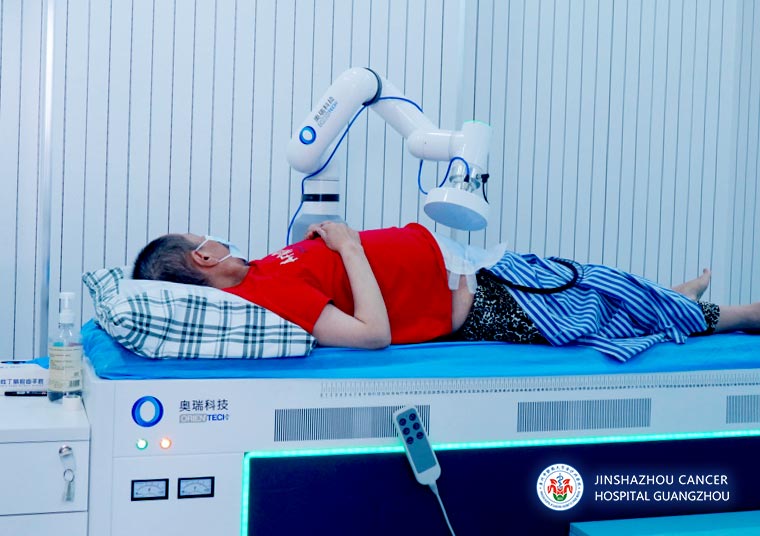
③ Treatment delivery: During treatment, the patient lies comfortably on the treatment table while the device gently heats the tumor area. Each session typically lasts 30--60 minutes. Medical staff continuously monitor the patient's condition to ensure safety and comfort.
④ Combination therapy: Hyperthermia is commonly used in combination with chemotherapy or radiotherapy to enhance therapeutic efficacy. The specific regimen is adjusted according to the patient's clinical condition.
⑤ Post-treatment follow-up: Patients undergo regular follow-up evaluations as instructed. Physicians assess treatment response through imaging and relevant clinical indicators, monitor tumor changes, and adjust subsequent treatment strategies and rehabilitation plans in a timely manner.
Safety and Precautions
The efficacy and safety of hyperthermia are influenced by multiple factors and may vary among individuals. To ensure both safety and therapeutic effectiveness, patients must strictly follow medical guidance.
① Indication limitations:
• Hyperthermia is not suitable for intracranial tumors, leukemia, the eyeball, testes, and certain other sites.
• Contraindications include severe cardiopulmonary insufficiency, cachexia, severe water--electrolyte imbalance, high fever, bleeding tendency, metallic foreign bodies in the body, active tuberculosis lesions, and similar conditions.
• Pregnant women and women during menstruation should not receive lower abdominal hyperthermia.
② Clothing preparation: patients should wear loose, pure cotton clothing and remove all metallic or magnetic objects (such as watches, belts, mobile phones, rings, necklaces, etc.) to prevent burns.
③ Precautions during treatment:
• Positioning: Follow the physician's instructions and maintain a comfortable, stable position. Avoid unnecessary movement to ensure treatment accuracy.
• Feedback of discomfort: During treatment, localized warmth or heat sensation is normal. If severe discomfort such as burning pain occurs, inform medical staff immediately.
• Avoid contact: As electrodes and devices are electrically active during treatment, patients should not touch the electrodes or equipment and should avoid direct contact with others.
④ Post-treatment considerations: After treatment, some patients may experience mild fatigue or low-grade fever, which are generally normal reactions. Physicians will make appropriate adjustments as needed and provide supportive care accordingly.
Frequently Asked Questions
① How are the treatment course and number of hyperthermia sessions determined?
The course and number of hyperthermia sessions depend on the patient's condition and treatment goals. In general, palliative treatment requires 6--10 sessions, adjuvant treatment usually requires 10--15 sessions, and local control treatment may require multiple courses, with each course consisting of approximately 10 sessions. The exact number of sessions and courses will be adjusted based on the physician's assessment and individual circumstances.
② Does hyperthermia need to be combined with other treatments?
In most cases, yes. At our hospital, hyperthermia is more commonly used as a "sensitizing and supportive" component. Based on tumor stage, location, and prior treatments, the MDT conducts a comprehensive evaluation and arranges appropriate coordination with radiotherapy, chemotherapy, interventional procedures, or systemic treatments within suitable time windows, in order to improve the feasibility and tolerability of the overall treatment plan.
③ How soon can normal daily life be resumed after treatment?
Most patients can resume daily activities relatively quickly after treatment, with some able to perform light activities on the same day or the following day. The ability to return to work, exercise, or other activities depends on the treatment area, number of sessions, whether hyperthermia is combined with radiotherapy/chemotherapy/interventional treatment, and the individual's physical condition. In general, light activities are recommended initially; if no significant discomfort occurs, activity levels can be gradually increased over several days. Please care for the treated area as instructed and attend follow-up visits as advised.
④ Can hyperthermia cure cancer?
It is generally not used as a single curative treatment. The value of hyperthermia lies primarily within comprehensive treatment strategies: it helps increase tumor sensitivity to radiotherapy and chemotherapy, alleviates some treatment-related discomfort, and, in selected patients whose goals focus on symptom relief or local control, contributes to improving quality of life.
Typical Case
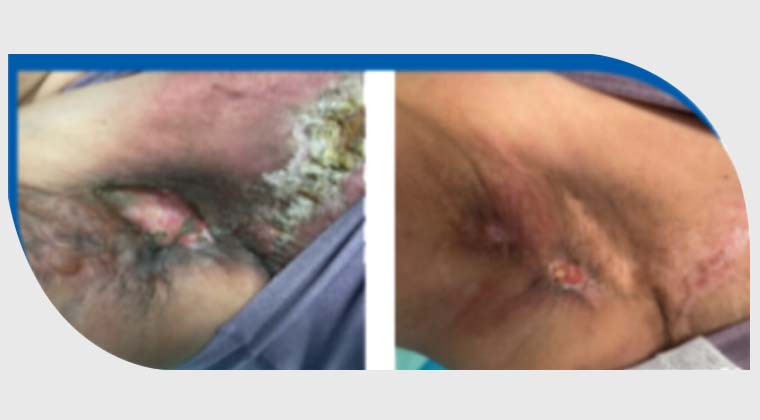
① Hyperthermia Combined with Radiotherapy --- Reduction of Skin Injury:
After postoperative radiotherapy for breast cancer, severe skin injury occurred.
Following the addition of hyperthermia, the skin injury was basically resolved.
Before Hyperthermia After Hyperthermia
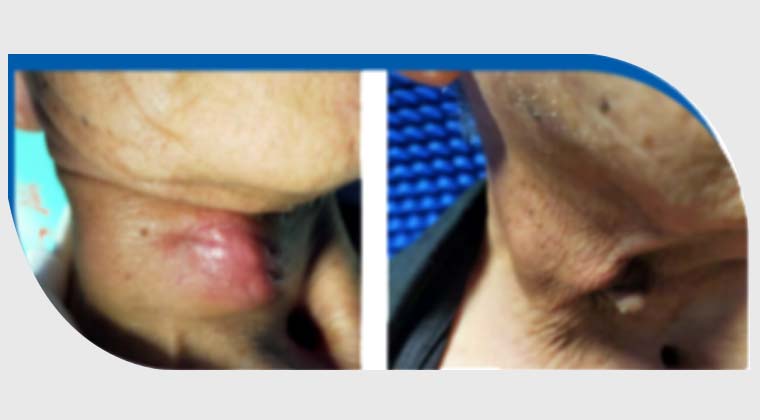
② Hyperthermia Combined with Radiotherapy --- Radiosensitization:
Cervical lymph node metastasis from laryngeal cancer;
after 30 sessions of combined radiotherapy and hyperthermia,
the tumor shrank and radiotherapy-related adverse reactions resolved.
Before Hyperthermia After Hyperthermia
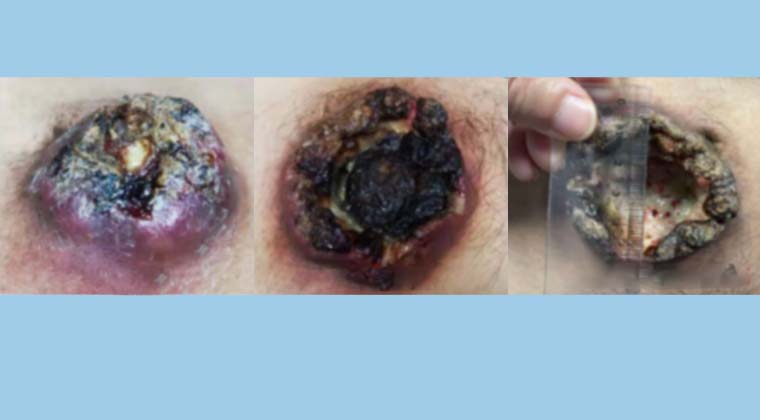
③ Hyperthermia Combined with Chemotherapy --- Enhanced Efficacy:
Abdominal wall metastasis from gastric cancer; after 100 sessions of combined therapy,
the tumor separated from the surrounding normal tissue.
After 400 sessions of hyperthermia, the tumor detached spontaneously.
The patient is still receiving hyperthermia, with more than 600 sessions completed to date.
Before treatment
After 100 sessions of hyperthermia
After 400 sessions of hyperthermia: tumor detachment
 + 86 17688273501
 Address
 Email Form
 Language
 English

 Hotline Phone+ 86 17688273501

 Back to Menu