Indications
① Applicable situations
• Patients whose tumors predominantly involve the peritoneum/abdominal cavity, with intraperitoneal dissemination or peritoneal metastasis, requiring enhanced local peritoneal control.
• Patients with malignant ascites (recurrent, large-volume ascites affecting abdominal distension, appetite, or respiration) who seek symptom relief and reduction of ascites through local therapy.
• Patients assessed by physicians as having a high risk of peritoneal metastasis after surgery or multimodal treatment, in whom HIPEC may be considered as part of comprehensive therapy for prophylactic or adjuvant management.
② Common tumor types
• Peritoneal metastasis/ascites from gastrointestinal malignancies such as gastric cancer and colorectal cancer.
• Intraperitoneal dissemination/ascites from gynecologic malignancies, including ovarian cancer and endometrial cancer.
• Dissemination associated with appendiceal mucinous neoplasms, including pseudomyxoma peritonei.
• Malignant peritoneal mesothelioma.
• Peritoneal metastases or malignant pleural/abdominal effusions from other tumors.
• Selected high-risk patients after surgery for advanced gastric cancer, colorectal cancer, or ovarian cancer, for prevention of peritoneal implantation metastasis.
Core Advantages
① Higher local drug concentration, stronger targeting: Chemotherapy drugs circulate directly within the abdominal cavity, achieving higher local concentrations around lesions and ensuring more direct contact; systemic absorption is relatively limited, resulting in lower systemic toxicity.
② Dual synergy of hyperthermia and chemotherapy for enhanced cytotoxicity: Treatment temperatures of 41-43℃ directly damage cancer cell structures, inhibit DNA repair, and promote apoptosis, while enhancing the penetration and cytotoxic effect of chemotherapeutic drugs.
③ More comprehensive abdominal coverage, thorough clearance: Continuous circulation of the perfusate fills the entire abdominal cavity, providing a "physical washing/rinsing" effect that helps remove free cancer cells and micro-metastases, minimizing treatment blind spots.
④ Particularly effective for controlling symptoms related to malignant pleural/abdominal effusions: Conventional therapies are often insufficient for abdominal distension, pain, or dyspnea caused by ascites, whereas multiple clinical studies show that HIPEC significantly improves symptoms and quality of life with good safety.
⑤ Minimally invasive catheter placement, relatively smaller trauma: For patients with unresectable or post-surgical large-volume malignant ascites, a catheter can be placed under ultrasound guidance or laparoscopy to establish the perfusion route without a major laparotomy; standardized procedures provide clinical guidance.
⑥ Maximized protection of normal tissues: Normal tissues and tumor cells have different temperature tolerances; under precise temperature control, HIPEC aims to kill tumor cells while minimizing unnecessary damage to normal tissues.
⑦ Highly complementary to surgery and systemic chemotherapy: HIPEC is a regional intensified therapy that can be combined with surgery and systemic chemotherapy as part of a comprehensive treatment plan, enhancing local peritoneal control and overall treatment coordination.
Why Choose Guangzhou University of Chinese Medicine --- Jinsazhou Hospital?
Our hospital has long been performing intraperitoneal hyperthermic perfusion chemotherapy (HIPEC) with well-equipped facilities, emphasizing precise temperature control, continuous circulation, and full-process monitoring. Clinical practice and workflow management experience are mature.
Before treatment, strict evaluation and stratified decision-making are conducted, considering lesion extent, patient tolerance, and overall treatment goals, avoiding "treatment for the sake of treatment" and ensuring individualized benefit-risk balance. During treatment, safety management and multi-step coordination are emphasized, with relevant disciplines involved as needed.
Relying on MDT multidisciplinary collaboration, HIPEC can be effectively integrated with surgery and systemic therapies, forming a continuous comprehensive treatment pathway. Symptom management, drainage care, and rehabilitation guidance are provided for issues such as ascites or abdominal distension. Follow-up and reassessment mechanisms are established to dynamically evaluate efficacy and tolerance, helping patients achieve safer treatment experiences and management of quality of life.
Technical Definition
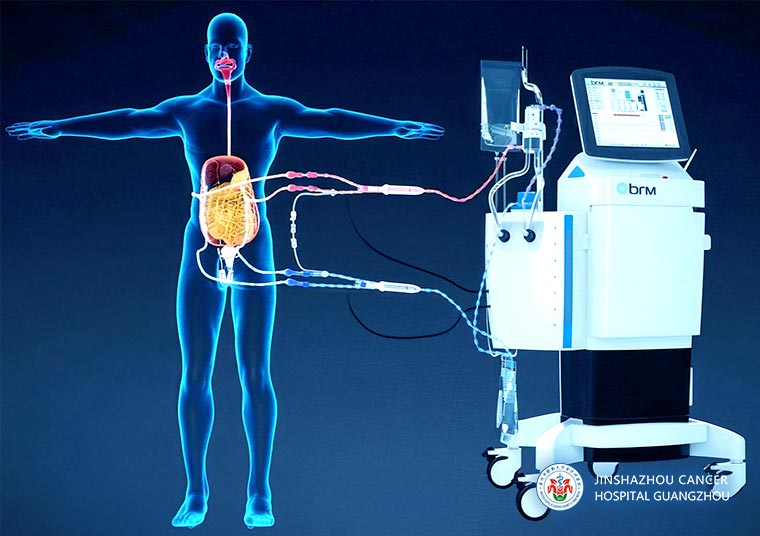
Intraperitoneal hyperthermic perfusion chemotherapy (HIPEC) is a regional intensified therapy that combines hyperthermia, localized chemotherapy, and physical perfusion. Under precise temperature control, a thermally regulated perfusate containing chemotherapeutic drugs circulates continuously in the abdominal cavity, directly targeting free cancer cells and micro-metastases. This achieves strong local treatment while minimizing systemic side effects. HIPEC is an important regional therapy within our hospital's minimally invasive treatment system.
Working Principle / Mechanism
① Exploiting the temperature tolerance difference between tumor and normal tissues
Tumor cells are more sensitive to temperature and are more easily damaged in a warm environment of approximately 40-43℃, while normal tissues are relatively tolerant, achieving both therapeutic effect and protection.
② Hyperthermia enhances chemotherapy efficacy
Heating increases cell membrane permeability, promoting drug entry into cells; it also strengthens the interaction between drugs and DNA and inhibits repair mechanisms, making tumor cells more sensitive to chemotherapy.
③ High local concentration with relatively lower systemic effects
Intraperitoneal perfusion significantly increases the local concentration of drugs while reducing systemic exposure, enhancing local tumor cell killing and minimizing systemic adverse effects.
④ Mechanical flushing effect
The circulating perfusate generates fluid shear forces that mechanically wash away free tumor cells and micrometastases in the abdominal cavity, causing tumor cells to detach from the peritoneal surface, reducing tumor burden and lowering the risk of recurrence.
Treatment Procedure
Hyperthermic perfusion chemotherapy varies in catheter placement, parameters, and medication depending on the treatment site (abdomen, thorax, bladder, etc.), but the overall procedure is similar. The following example describes intraperitoneal hyperthermic perfusion chemotherapy:
① Pre-Treatment: Evaluation and Preparation
• Complete blood tests and imaging assessments to determine treatment suitability.
• Understand the treatment purpose, process, and potential risks; complete informed consent. Follow medical instructions such as fasting and emptying the bladder.
② During Treatment: Catheter Placement and Circulating Perfusion
• Place perfusion catheters (usually 2-4) in the operating room or interventional environment.
• Connect to the device to establish a circulating pathway; set the temperature, flow rate, and treatment duration according to the protocol. Heated chemotherapy solution (~42-43°C) circulates continuously within the abdominal cavity while drainage is performed, creating a dual effect of "washing + treatment."
• If discomfort such as abdominal distension, pain, or mild fever occurs, inform the medical staff immediately; adjust body position under guidance if necessary to ensure even distribution of the perfusion fluid.
③ Post-Treatment: Observation and Follow-Up
• Stop perfusion and drain as much solution as possible; leave drainage catheter if needed for continued observation.
• Follow medical instructions for review and follow-up (e.g., blood tests, liver and kidney function, imaging evaluations) to assess efficacy and monitor potential adverse reactions.
Safety and Precautions
① Overall Safety: Hyperthermic intraperitoneal chemotherapy (HIPEC) is generally well tolerated. Vital signs and key parameters are monitored throughout the procedure to ensure patient safety.
② Possible Discomforts and Reactions
• Most reactions are mild to moderate and manageable symptomatically, such as abdominal bloating, sweating, mild abdominal pain, and low-grade fever.
• Some patients may experience gastrointestinal reactions, including nausea and vomiting.
• In rare cases, chemotherapy-related bone marrow suppression or other adverse effects may occur, typically managed through follow-up and supportive care.
③ Precautions
• Female patients are generally advised to avoid treatment during menstruation.
• For patients with indwelling puncture or drainage sites, maintain cleanliness and dryness, monitor for redness, bleeding, or fluid leakage, and promptly inform medical staff of any abnormalities.
Frequently Asked Questions
① How long does one session of hyperthermic intraperitoneal chemotherapy (HIPEC) take? Is the procedure comfortable?
Answer: A HIPEC session typically lasts around 60 minutes (depending on the specific protocol). During the procedure, sedation and analgesia may be administered as needed, and adjustments are made according to the patient's response to minimize discomfort, allowing the patient to complete the treatment in a relatively comfortable and tolerable state.
② How many HIPEC sessions are usually required? What is the interval between sessions?
Answer: The number of sessions depends on the treatment purpose and the patient's condition. For prophylactic use, 1-3 sessions are common. For therapeutic purposes, such as existing peritoneal metastases or malignant ascites, 3-5 sessions are typical. The recommended interval between sessions is generally 24 hours or more, with the exact timing determined by the physician based on patient tolerance and the overall treatment plan.
③ Can HIPEC cure cancer?
Answer: HIPEC is an important component of comprehensive cancer therapy, primarily used to enhance local control within the abdominal cavity and reduce residual free cancer cells and micrometastases. It is generally insufficient for a standalone cure and is typically combined with surgery, systemic treatments (chemotherapy, targeted therapy, immunotherapy), and radiotherapy. An individualized plan is formulated by an MDT.
 + 86 17688273501
 Address
 Email Form
 Language
 English

 Hotline Phone+ 86 17688273501

 Back to Menu