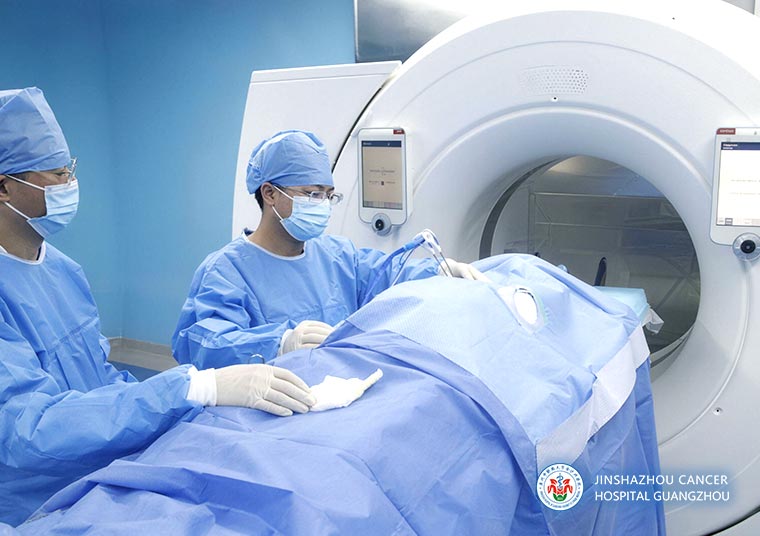
Indications
1.Applicable situations
• Tumors with a diameter ≤ 3 cm, where complete ablation with optimal outcomes can be expected.
• Lesions ≤ 5 cm, which may be treated with ablation alone or with combined "interventional therapy + ablation" after appropriate evaluation.
• Patients who cannot tolerate surgery, have postoperative recurrence, or are unwilling to undergo surgery.
• Patients seeking less invasive treatment with faster recovery.
2.Common indications
Various solid tumors, including those of the thyroid, liver, lung, kidney, breast, prostate, and uterine fibroids.
Core Advantages
① High-efficiency thermal ablation
Microwave energy heats tissue rapidly with a controllable ablation zone, allowing tumor tissue to reach effective cytotoxic temperatures within a short time and improving ablation efficiency.
② Minimal influence from blood flow
Compared with some other thermal ablation techniques, microwave ablation is less affected by the blood flow--related "heat sink effect," which is more favorable for achieving complete ablation of the lesion.
③ Minimally invasive and repeatable
Treatment is completed through needle-sized percutaneous puncture, resulting in minimal trauma and rapid recovery; under appropriate conditions, the procedure can be repeated.
④ Flexible combination with other therapies
Microwave ablation can be combined with multiple treatment modalities:
TACE + MWA: embolization to block blood supply followed by ablation, improving the completeness of tumor destruction;
Combination with systemic therapy: used together with chemotherapy, targeted therapy, or immunotherapy as part of a comprehensive treatment strategy;
Management of recurrent lesions: applied for precise control of focal recurrence or residual disease.
This high degree of flexibility in combined treatment is one of the key reasons for the widespread adoption of microwave ablation.
Why Choose Jinshazhou Hospital?
Microwave ablation is one of the most mature and core technologies within our hospital's minimally invasive treatment system and serves as a foundational capability platform for minimally invasive oncologic therapies. As one of the most widely applied ablation modalities with the broadest disease coverage, microwave ablation has accumulated extensive clinical decision-making experience through long-term practice, enabling individualized management for different anatomical sites, disease stages, and therapeutic objectives.
Relying on a well-established imaging-guidance system, our hospital achieves full-process management encompassing preoperative assessment, precise intraoperative ablation, and objective postoperative follow-up. As a result, microwave ablation is applied not only to "eliminate lesions" but also to optimize overall treatment strategies.
In functionally and cosmetically sensitive areas such as the thyroid, microwave ablation offers selected patients a treatment option that preserves organ structure and function, achieving a more favorable balance among safety, cosmetic outcomes, and quality of life.
At Jinshazhou Hospital, microwave ablation is also widely used in coordination with interventional therapies, radiotherapy, and systemic treatments. It can serve both as an initial local treatment modality and as a precise tool for controlling recurrent or residual lesions, functioning as a key integrative hub connecting multiple treatment approaches.
Technical Definition
Microwave ablation is a widely used and well-established local thermal ablation technique. It employs high-frequency microwave energy to rapidly raise the temperature of tumor tissue to 60–100 °C, inducing coagulative necrosis of cells and thereby achieving precise local tumor inactivation.
The procedure requires only a small percutaneous puncture, is minimally invasive, allows for rapid recovery, and is one of the most mature and broadly applicable technologies within modern minimally invasive treatment systems.
Mechanism of Action / Working Principle
Microwave ablation generates high-frequency electromagnetic waves through a microwave generator, which are delivered to tumor tissue via the ablation needle. This causes polar molecules within the tissue to vibrate rapidly and rub against each other, quickly converting energy into heat. The sustained temperature rise disrupts tumor cell membrane structures, denatures proteins, and induces coagulative necrosis.
Due to the strong microwave energy, rapid heating, and stable action range, effective ablation can be achieved in a short time, and the ablation zone can be precisely controlled under imaging guidance, minimizing damage to surrounding normal tissue.
Treatment Procedure
① Preoperative Assessment:
Use imaging studies to determine tumor location, size, number, and relationship with critical structures.
② Image-Guided Localization:
Precisely locate the lesion under ultrasound or CT guidance.
③ Ablation Needle Insertion:
Percutaneously insert the microwave ablation needle into the tumor.
④ Microwave Ablation:
Deliver microwave energy to induce thermal coagulative necrosis of the tumor tissue.
⑤ Postoperative Follow-Up:
Regularly assess ablation effectiveness and monitor for recurrence via contrast-enhanced CT or MRI.
Safety and Precautions
Microwave ablation safety is based on a controllable thermal effect range and clearly defined imaging-guided boundaries.
Before treatment, it is essential to evaluate the spatial relationship between the tumor and critical structures (such as blood vessels, nerves, airways, or glands) and select appropriate energy parameters and puncture paths according to the characteristics of each organ.
During the procedure, the ablation area can be monitored in real time under imaging guidance, concentrating the thermal effect on the lesion itself and minimizing damage to surrounding normal tissues.
Post-treatment, patients may experience temporary local discomfort or mild fever, which are generally expected reactions and usually require no special intervention.
Through standardized assessment, precise positioning, and operation by an experienced team, stable and repeatable treatment outcomes can be achieved while ensuring safety.
Frequently Asked Questions
① Will microwave ablation affect organ function?
Microwave ablation primarily targets the lesion itself. With proper assessment and precise operation, it can preserve surrounding normal tissues and organ function to the greatest extent, making it especially suitable for areas where functional protection is required.
② Can microwave ablation only be performed once?
Under appropriate conditions, microwave ablation can be repeated and may also be combined with interventional or systemic therapy. It is a minimally invasive method with long-term treatment flexibility.
③ How is it determined whether the treatment effect is "sufficient"?
Treatment effect is mainly assessed through imaging follow-up. After ablation, the lesion usually gradually shrinks or stabilizes. The presence of any residual tissue should be comprehensively evaluated using enhanced CT or MRI.
Typical Case
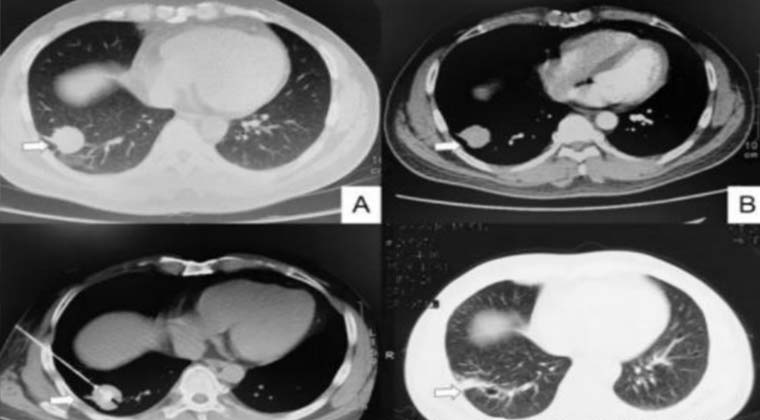
The patient had a 3 cm adenocarcinoma in the right lower lung (top left and top right images).
Microwave ablation was performed under local anesthesia (bottom left image).
Follow-up at 3 months showed complete necrosis of the lesion with fibrotic changes.
The patient has now survived more than 3 years with no tumor recurrence.
 + 86 17688273501
 Address
 Email Form
 Language
 English

 Hotline Phone+ 86 17688273501

 Back to Menu