From dizziness and being confined to a wheelchair at admission to walking freely and living independently --- precise radiotherapy for brain metastases
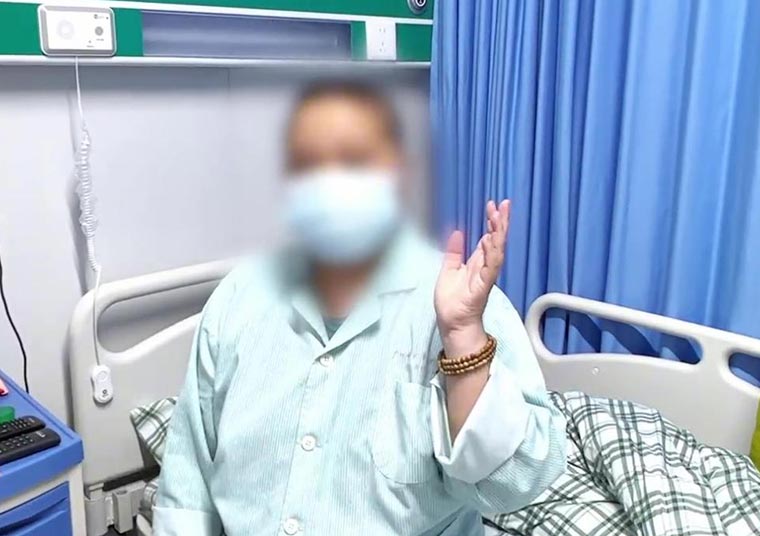
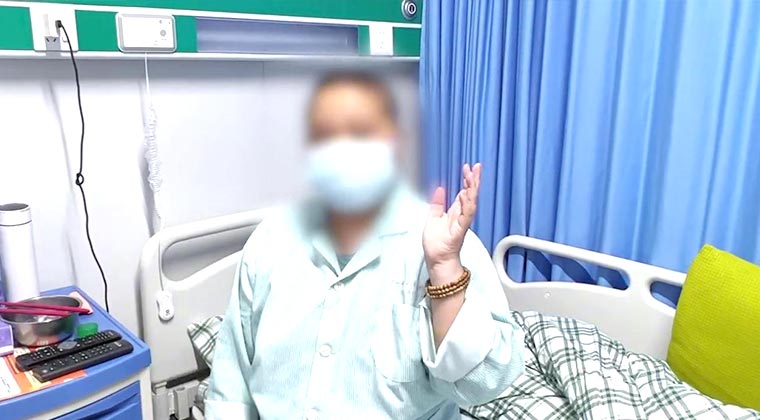
"During that period, I constantly felt weak and needed support even to go to the bathroom." The patient repeatedly experienced dizziness, fatigue, and unsteady walking, with daily activities clearly limited. Examination at a local hospital suggested an intracranial space-occupying lesion and recommended further radiotherapy. After thorough discussion with family, the patient decided to follow a standardized treatment pathway as soon as possible: "My family all agreed, and the next day I came here on my own." Upon arrival at our hospital, the patient still required wheelchair assistance.
Initial Assessment: Imaging Reveals Edema and Shift, Clarifying Symptom Sources
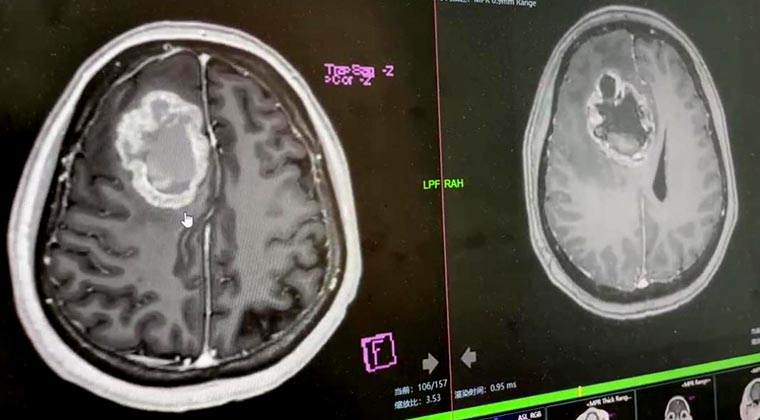
After admission, imaging indicated intracranial metastatic lesions. The radiotherapy team conducted a systematic evaluation based on symptoms and imaging. The attending physician explained, "There is extensive edema surrounding the lesions, with a midline shift of approximately 1--2 cm, and both lateral ventricles are compressed and deformed." These changes often worsen dizziness, headache, fatigue, and gait instability, and indicate that treatment must address not only lesion control but also the effects of edema and intracranial compression on neurological function.
Personalized Precision Radiotherapy: Minimizing Burden While Targeting Accurately
Based on the location of the patient's lesions and imaging findings, our team developed a personalized precision radiotherapy plan. Before treatment, positioning and planning are conducted: localization images are obtained with the patient in a fixed position, and previous imaging is fused if necessary. The target area is delineated, and dose constraints are set for normal brain tissue. During treatment, under image guidance and standardized quality control, each irradiation is delivered according to the plan, concentrating the dose precisely on the lesions while minimizing unnecessary impact on healthy brain tissue.
During treatment, the patient clearly felt the effects: "I fall asleep within two minutes of radiotherapy; I can eat and sleep normally." In practice, precision radiotherapy is not as intimidating as imagined --- most of the time, it simply requires lying in position and cooperating with alignment, and the session is over in a few minutes. The procedure is non-invasive, places relatively little burden on the patient, and is easier to complete throughout the treatment course.
Follow-up Results: Tumor Reduced by Approximately One-Third, Edema Significantly Resolved
After completing a phase of treatment, follow-up evaluation showed that the tumor volume had decreased by about one-third. The surrounding edema had significantly subsided, the midline shift had reduced from approximately 1--2 cm to a few millimeters, and the compression of the lateral ventricles had relieved, with structures approaching normal.
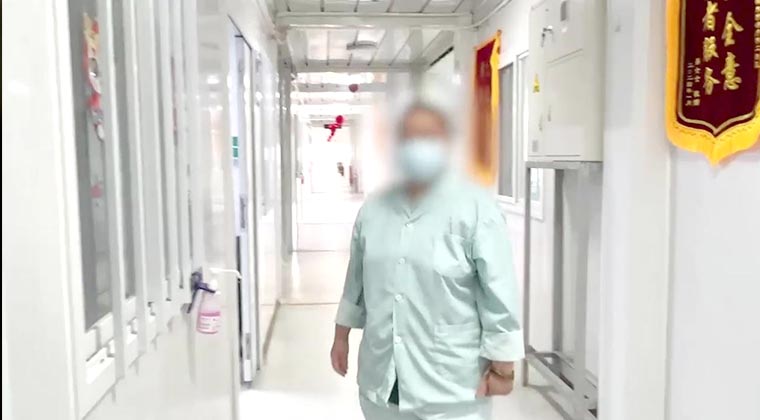
Corresponding to the imaging changes, the patient's symptoms and daily functioning also improved: previously severe dizziness and headaches were alleviated, eating and sleeping returned to normal, and walking ability gradually recovered. "After ten sessions of radiotherapy on the left side, I slowly felt much better. I could walk on my own and go to the bathroom by myself --- walking is no longer a problem."
Left image: post-radiotherapy
Right image: pre-radiotherapy
Dynamic Re-evaluation and Consolidation: Making Treatment Effects More Stable and Sustainable
Radiotherapy is not "finished in one session"; it is a process that requires continuous treatment alongside ongoing assessment. As the tumor shrinks and edema decreases, the team optimizes subsequent strategies based on follow-up results. The patient also mentioned: "After the tumor became smaller, they made a second plan... added a few more radiotherapy sessions to consolidate the effect, and I agreed." Performing consolidation irradiation based on re-evaluation helps further strengthen local control while keeping risks manageable.
From Wheelchair to Walking Freely: Functional Recovery Brought by Precision Radiotherapy for Brain Metastases
This improvement comes from the patient's persistence and from the team's step-by-step closed-loop management of assessment, implementation, follow-up, and optimization. Facing metastases does not mean one must passively wait---under specialized evaluation and standardized treatment support, many patients still have the opportunity to relieve symptoms and improve quality of life. For patients, the most important thing is not the medical terminology, but whether they can stand today, eat and sleep tomorrow. May every patient gradually regain their functional independence through scientifically guided treatment and continuous follow-up.
 + 86 17688273501
 Address
 Email Form
 Language
 English

 Hotline Phone+ 86 17688273501

 Back to Menu