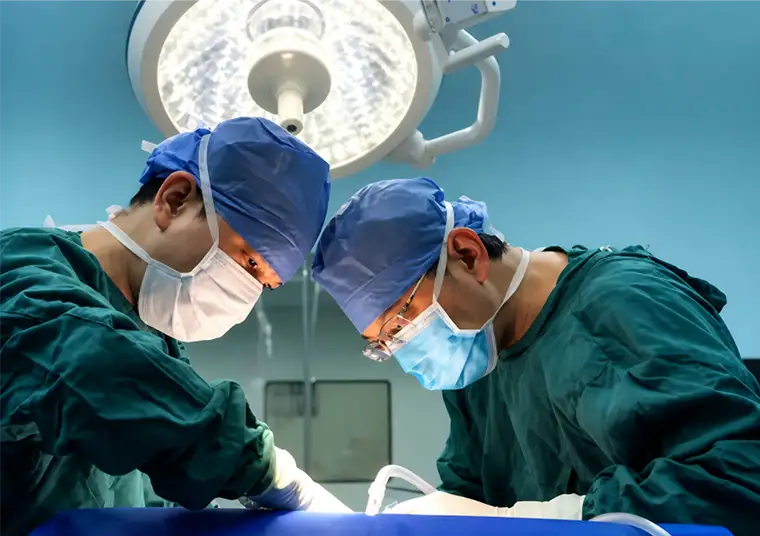
Cancer Treatment
Does Not Always Require Major Surgery
We address real-world treatment challenges
to help you explore options that may be better suited to your individual condition.
1What if I am older or have limited heart and lung function and may not be able to tolerate surgery?
Minimally invasive local treatments may be considered following a comprehensive evaluation. These approaches do not require open chest or abdominal surgery and are generally performed through small puncture sites. Compared with open surgery, they typically place fewer demands on cardiopulmonary function, providing additional treatment options for patients who may not be suitable candidates for conventional surgery.
2If the cancer has recurred or progressed, what local treatment options are available?
For locally recurrent tumors, several minimally invasive approaches may be considered, including interventional therapy, ablation, and Yttrium-90 (Y-90) therapy. These techniques are designed to target the tumor locally and are generally performed through small puncture sites or using noninvasive approaches. By focusing treatment on the target lesion, they can help minimize damage to surrounding healthy tissue and provide additional treatment options for patients with local recurrence.
3If the cancer has already reached an intermediate or advanced stage, can local treatment still be considered?
Local treatment options such as interventional therapy, ablation, and radioactive seed implantation may still be considered.
Delivered through small puncture sites or noninvasive approaches, these treatments focus primarily on the tumor while limiting the impact on healthy tissues elsewhere in the body. Treatment-related side effects are generally less pronounced, and recovery is often faster. In appropriately selected patients, local treatment may help control tumor progression, relieve related symptoms, and create additional opportunities for subsequent systemic therapy.
4What if the side effects of chemotherapy, such as nausea, vomiting, and hair loss, are difficult to tolerate?
Minimally invasive interventional chemotherapy differs from systemic chemotherapy in the way the medication is delivered. With interventional chemotherapy, anticancer drugs are delivered directly to the tumor region, concentrating treatment within the local target area. Systemic chemotherapy, by contrast, circulates through the bloodstream and affects the entire body.
Because systemic chemotherapy acts throughout the body, it is more likely to cause systemic side effects such as nausea, vomiting, and hair loss. Interventional chemotherapy primarily uses localized drug delivery to concentrate treatment at the tumor site, thereby limiting systemic exposure and potentially reducing the likelihood of systemic side effects.
5What if I am concerned about the physical impact of surgery and a long recovery affecting my daily life?
Minimally invasive local treatments target the tumor through small puncture sites or noninvasive approaches, resulting in less physical trauma to the body. Most patients are able to get out of bed and begin moving around within 1–2 days after minimally invasive treatment. Treatment-related side effects are generally less pronounced, and the recovery period is typically shorter.
6With so many treatment technologies available, how do I know which one is right for me?
A range of minimally invasive local treatment technologies is available, including interventional therapy, ablation, Yttrium-90 (Y-90) therapy, and precision radiation therapy. These approaches can be evaluated for a variety of clinical situations, including primary tumors, locally recurrent disease, and multiple metastatic lesions.
Each technology has its own indications and advantages. Through a multidisciplinary team (MDT) consultation, our specialists evaluate each patient's individual condition and determine the treatment approach best suited to their needs.
Not Sure Whether Minimally Invasive Treatment Is Right for You?
Contact Us for a Free Assessment
Our Core Minimally Invasive Treatment Technologies
Minimally Invasive Interventional Therapy
A catheter is advanced directly into the arteries supplying the tumor. The tumor's blood supply can then be blocked through embolization, while chemotherapy drugs are delivered locally to the target area. This approach enables precise local treatment while limiting systemic exposure and reducing systemic side effects.
May Be Suitable for: Liver cancer, lung cancer, kidney cancer, pancreatic cancer, bladder cancer, uterine fibroids, nasopharyngeal cancer, and thyroid cancer
Yttrium-90 (Y-90) Microsphere Therapy
Microspheres containing the radioactive isotope Yttrium-90 are delivered directly into the blood vessels supplying the tumor, providing targeted internal radiation directly to the tumor. This allows a high radiation dose to be concentrated in the tumor while minimizing damage to surrounding healthy liver tissue.
May Be Suitable for: Liver cancer, colorectal cancer, breast cancer, lung cancer, pancreatic cancer, cholangiocarcinoma, and liver metastases
Cryoablation (Argon-Helium Cryoablation)
Extremely low temperatures, reaching approximately −196°C, are used to freeze and destroy tumor tissue. The cooling effect can also help reduce pain during treatment. With its minimally invasive approach, cryoablation is generally associated with less physical trauma and a relatively short recovery period.
May Be Suitable for: Liver cancer, kidney cancer, lung cancer, prostate cancer, bone tumors, breast fibroadenomas, and uterine fibroids
Radiofrequency Ablation (RFA)
High-frequency electrical current generates heat within the target area, producing thermal coagulation and destroying tumor tissue. The treatment can be precisely targeted to the tumor while limiting damage to surrounding healthy tissue.
Suitable for: Liver cancer, stomach cancer, colorectal cancer, breast cancer, lung cancer, and uterine cancer
Microwave energy generates heat rapidly and efficiently, making MWA suitable for larger tumors and highly vascular lesions.
Suitable for: Thyroid cancer, liver cancer, lung cancer, kidney cancer, breast cancer, and prostate cancer
Kangbo Knife (Combined Cryothermal Ablation)
Combines freezing and heating to enhance tumor destruction and is particularly suitable for deep-seated and multiple tumors.
Suitable for: Liver cancer, lung cancer, pancreatic cancer, thyroid cancer, prostate cancer, and liver and kidney tumors
NanoKnife (Irreversible Electroporation, IRE)
High-voltage electrical pulses disrupt tumor cell membranes while helping preserve critical structures such as blood vessels and bile ducts.
Suitable for: Pancreatic cancer, hilar cholangiocarcinoma, kidney cancer, prostate cancer, and soft tissue tumors
Haifu Knife (High-Intensity Focused Ultrasound, HIFU)
High-intensity focused ultrasound precisely targets and destroys tumor tissue from outside the body. The treatment is completely noninvasive and can be repeated when clinically appropriate.
Suitable for: Pancreatic cancer, liver cancer, bone tumors, uterine fibroids, breast fibroadenomas, and prostate cancer
Iodine-125 (I-125) Seed Implantation
Radioactive seeds are permanently implanted within the tumor, continuously delivering low-dose radiation to the target area while minimizing exposure to surrounding healthy tissue.
Suitable for: Prostate cancer, lung cancer, thoracic tumors, liver cancer, pancreatic cancer, brain tumors, and bone tumors
A precisely positioned laser fiber delivers thermal energy to coagulate targeted tissue. This technique is suitable for small lesions, thyroid nodules, and varicose veins.
Suitable for: Thyroid nodules, liver cancer, liver metastases, varicose veins, benign prostatic hyperplasia, and lung cancer
Personalized Treatment Planning with MDT
Comprehensive Evaluation · Technology Selection
Our portfolio of 10 minimally invasive technologies allows treatment options to be precisely matched to each patient's needs across all stages of cancer care, from early to advanced disease.
Multidisciplinary Expert Consultation
Specialists in medical oncology, surgical oncology, interventional oncology, radiation oncology, traditional Chinese medicine, and medical imaging jointly review each case. This multidisciplinary approach helps overcome the limitations of single-specialty decision-making and supports more comprehensive treatment planning.
One Patient, One Plan · Personalized Care
Cancer type, stage, age, overall health, and other individual factors are comprehensively evaluated to develop a tailored treatment pathway for each patient and deliver truly personalized care.
Continuous Monitoring · Ongoing Adjustment
Treatment response is evaluated at key stages, allowing the treatment pathway to be continuously optimized as the patient's condition changes.
Looking for a Personalized MDT Treatment Plan?
Contact Us for a Free Assessment
Senior Specialist Team
Cao Mingrong
Professor · Chief Physician
Specialties: One of the first specialists in China to use yttrium-90 (Y-90) for the treatment of liver cancer. Specializes in yttrium-90 microsphere radioembolization for primary liver cancer, intrahepatic cholangiocarcinoma, and liver metastases.
Yao Zhongping
Associate Chief Physician
Specialties: Specializes in comprehensive treatment of solid tumors including lung cancer, breast cancer, hepatobiliary tumors, and gastrointestinal tumors, integrating multidisciplinary diagnostic and treatment plans; experienced in individualized intervention and full-course management of mid-to-late stage tumors.
Liu Ying
Associate Chief Physician
Specialties: Specializes in comprehensive treatment of liver cancer, cholangiocarcinoma, lung cancer, colorectal cancer, and other tumors, with particular expertise in melanoma and liver metastases from melanoma.
Transparent Care at Every Step
1
Online / Telephone Consultation
Submit medical records and information · Preliminary expert assessment
2
Admission Scheduling
Private transportation service · Assistance with admission procedures
3
MDT Evaluation
Multidisciplinary Case Discussion · Personalized Treatment Planning
4
Minimally Invasive Treatment
Treatment performed by senior specialists · Real-time monitoring throughout treatment
5
Discharge & Regular Follow-Up
Rehabilitation guidance and support · Regular Check-Ups & Follow-Up
🌏 Professional medical interpretation throughout your visit
🚗 Private transportation to and from the airport / high-speed railway station
📋 Transparent treatment costs with detailed charges available for review
💬 Visa / Admission Assistance
Clinical Cases
Liver Cancer
Hepatocellular Carcinoma · BCLC Stage C / CNLC Stage IIIa · 41-Year-Old Male
Challenges Before Treatment
During an outpatient examination at our hospital in September 2025, the patient's alpha-fetoprotein (AFP) level was >60,500 ng/mL and PIVKA-II level was >300,000 mAU/mL. PET-CT indicated hepatocellular carcinoma with multiple intrahepatic lesions and satellite lesions, with invasion of the liver capsule and adjacent peritoneum, tumor thrombus in the left branch of the portal vein, and thrombosis in the right branch. The patient also had cirrhosis and abdominopelvic ascites, as well as lymph node metastases involving the peritoneal region, left cardiophrenic angle, hepatic hilum, and right lower abdominal wall.
Combined Minimally Invasive Treatment
Beginning September 27, 2025, the patient underwent six sessions of transarterial chemoembolization (TACE) combined with hepatic arterial infusion chemotherapy, followed by maintenance immunotherapy.
Interim Results: Follow-up imaging performed on June 29, 2026 showed that the lesions had decreased significantly in size compared with the previous examination. At the same time, both alpha-fetoprotein (AFP) and PIVKA-II levels had returned to the normal range, indicating a favorable treatment response.
Breast Cancer
Invasive Ductal Carcinoma of the Right Breast (cT2N3M1, Stage IV), with Axillary and Supraclavicular Lymph Node Metastases · 64-Year-Old Female
Challenges Before Treatment
In January 2026, the patient noticed a mass in the lower outer quadrant of the right breast and enlarged right axillary lymph nodes. Breast ultrasound performed at a local hospital showed a 2.45 × 2.16 cm heterogeneous, irregular mass at the 8 o'clock position in the lower outer quadrant of the right breast, along with enlarged right axillary, supraclavicular, and infraclavicular lymph nodes.
On January 13, 2026, a needle biopsy of the breast mass showed invasive ductal carcinoma, no special type (NST), grade 3, with vascular invasion. HER2 was positive (+).
Combined Minimally Invasive Treatment
After admission, a needle biopsy of the right breast mass was performed under local anesthesia on February 6, 2026. Beginning February 13, the patient underwent six cycles of arterial infusion chemotherapy combined with local hyperthermia.
Following completion of neoadjuvant conversion therapy, the patient underwent a right modified radical mastectomy under general anesthesia on July 9, 2026.
Interim Results: After six cycles of minimally invasive arterial infusion chemotherapy, follow-up examinations showed significant tumor shrinkage, indicating that the patient had become eligible for surgery. A right modified radical mastectomy was performed on July 9. Postoperative pathology showed a pathological complete response (pCR).
Preoperative imaging had indicated lymph node metastases in the internal mammary and supraclavicular regions, where complete surgical dissection is difficult. Following multidisciplinary team (MDT) evaluation, adjuvant radiation therapy was recommended. The patient recovered satisfactorily after surgery and is currently undergoing adjuvant radiation therapy.
Which Minimally Invasive Treatment Is Right for Me?
Contact Us for a Free Assessment
Frequently Asked Questions from Patients and Families
Q: Which tumors can be treated with minimally invasive therapies?
For most solid tumors, minimally invasive approaches such as ablation and interventional therapies may be considered following evaluation. Common indications include primary and metastatic liver cancer, lung cancer, kidney cancer, pancreatic cancer, thyroid nodules and thyroid cancer, prostate cancer, uterine fibroids, breast fibroadenomas, and bone and soft tissue tumors.
Minimally invasive treatment may also be considered as part of a comprehensive treatment strategy for patients with multiple metastases, older patients, and those in poorer overall health. Whether a particular treatment is appropriate must be determined based on CT, MRI, PET-CT, pathology reports, and other relevant medical records, followed by a preliminary assessment by our specialist team.
Q: Is minimally invasive treatment as effective as surgery?
Minimally invasive treatment and surgery are not competing approaches; rather, they play complementary roles in comprehensive cancer care. Surgery primarily focuses on the curative resection of early-stage tumors, while minimally invasive treatment aims to achieve precise local tumor control with minimal invasiveness.
For patients with intermediate- or advanced-stage cancer that is considered unresectable, or for those who prefer not to undergo surgery, a comprehensive approach combining minimally invasive interventional therapy or ablation with chemotherapy, radiation therapy, targeted therapy, or immunotherapy may help relieve symptoms, preserve organ function, and improve quality of life. In clinical practice, some patients whose tumors were initially considered unresectable have achieved long-term disease control and survival following combined minimally invasive treatment.
Q: Does minimally invasive treatment require hospitalization? How long is the hospital stay?
For safety and appropriate clinical monitoring, most minimally invasive procedures are performed during a hospital stay. A typical hospital stay for a single treatment session is approximately 3-7 days. Compared with conventional open chest or abdominal surgery, hospitalization and recovery times are generally shorter.
For international patients, treatment schedules are also coordinated based on the treatment cycle, the patient's recovery, and visa validity. Some treatments, including certain interventional procedures, need to be performed in stages. In these cases, doctors plan the treatment intervals accordingly to minimize the need for repeated travel to and from China whenever possible.
Q: What should international patients prepare before coming to our hospital for treatment?
① Submit Medical Records: We recommend providing recent imaging studies, pathology reports, laboratory test results, and records of previous treatments. Once the records are received, our specialist team will conduct a preliminary assessment of the patient’s condition, helping the patient understand potential treatment options before traveling to China and plan the trip accordingly.
② Travel Arrangements: If needed, our hospital can provide relevant medical documentation to assist with the visa application process. Patients who send their flight or train itinerary to and from Guangzhou in advance can arrange complimentary transportation to and from the airport or high-speed railway station.
③ Language & Accommodation: Our hospital provides interpretation support in multiple languages, including Chinese, English, Russian, and Mongolian. Our team can assist with admission procedures, payments and medication collection, communication with medical staff, document translation, and other matters during the patient’s stay. During treatment intervals when hospitalization is not required, patients may stay at nearby hotels, and our international medical team can provide accommodation recommendations and transportation guidance.
④ Commercial Health Insurance: Patients with international private health insurance are advised to confirm reimbursement requirements with their insurance provider in advance. Based on the care actually provided, our hospital can assist by providing relevant documentation, including medical records and itemized statements of charges.
 + 86 17688273501
 Address
 Email Form
 Language
 English


 Hotline Phone+ 86 17688273501


 Back to Menu