Zadaxin (Thymosin alpha-1 for injection): immunomodulation and supportive therapy in comprehensive cancer treatment
1. Why do patients with malignant tumors need to pay attention to their immune status?
Cancer treatment is often not completed in a single step. Surgery, radiotherapy, chemotherapy, targeted therapy, immunotherapy, and oncolytic virus therapy are frequently carried out in stages and may also be combined in various regimens.
During this process, the patient’s physical condition plays a crucial role. If there is a decrease in white blood cells or lymphocytes, recurrent infections, fever, fatigue, or delayed recovery, the originally planned treatment may need to be postponed, dose-reduced, or even interrupted.
Therefore, a well-maintained immune status is not an abstract concept, but a fundamental factor directly related to the patient’s ability to continue treatment, reduce the risk of infections, and maintain physical strength and quality of life.
A stable immune status helps patients better complete comprehensive treatment
2. What is Zadaxin?
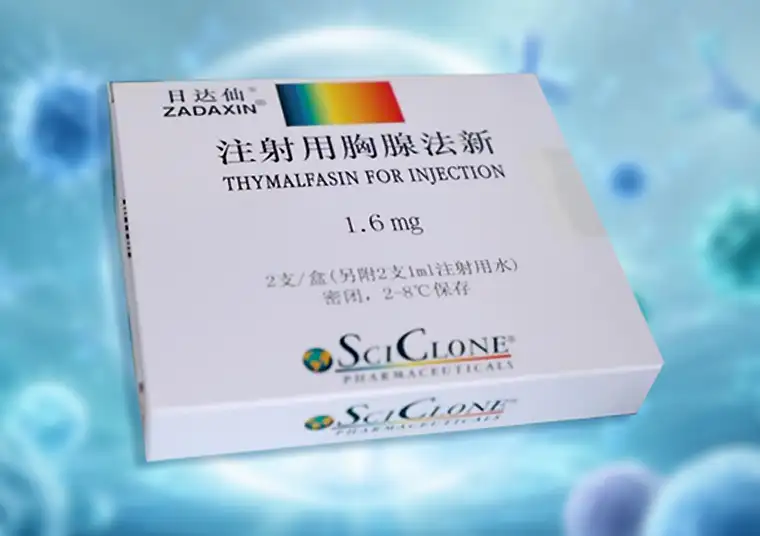
Zadaxin is the brand name of thymosin alpha-1 for injection. Its main active component is thymosin alpha-1, a peptide composed of 28 amino acids, typically administered via subcutaneous injection.
Thymosin alpha-1 is a prescription immunomodulatory agent. In cancer treatment, it does not replace antitumor therapies such as surgery, radiotherapy, chemotherapy, or targeted therapy. Instead, it is used as an immunomodulatory and supportive option within comprehensive treatment, helping patients better manage immune status, treatment tolerance, and continuity of therapy.
Thymosin alpha-1 is usually administered by subcutaneous injection
3. What benefits can thymosin alpha-1 provide for patients with malignant tumors?
① Reduction of infection and fever impact: when white blood cells or lymphocytes decrease, patients are more prone to infections and fever. Thymosin alpha-1 may help support immune function and reduce the impact of recurrent infections on treatment schedules.
② Support for postoperative recovery:in patients with reduced physical strength and slow recovery after surgery, it can be used as part of perioperative and postoperative supportive therapy, helping bridge subsequent treatments.
③ Improvement of chemotherapy tolerance:it may assist in managing post-chemotherapy fatigue, loss of appetite, decreased immune indicators, and delayed recovery.
④ Support during radiotherapy and chemoradiotherapy:especially in settings such as concurrent chemoradiotherapy for lung cancer, it may be used in the management of risks such as lymphocyte reduction, pulmonary infection, and radiation pneumonitis.
⑤ Maintenance of physical strength and quality of life:it may help some patients maintain a more stable physical condition, creating better conditions for continued treatment.
Thymosin alpha-1 can provide supportive assistance in infection management, postoperative recovery, and treatment tolerance
4. Indications
① Common malignancies:non-small cell lung cancer, gastric cancer, colorectal cancer, hepatocellular carcinoma, etc.
② Common clinical scenarios:
· Decreased white blood cells and lymphocytes during radiotherapy, chemotherapy, or concurrent chemoradiotherapy.
· Recurrent infections, fever, and delayed recovery after treatment.
· Reduced physical strength after surgery, preparing for subsequent adjuvant therapy.
· Decreased treatment tolerance after multiple cycles, leading to treatment delay, dose reduction, or interruption.
· Patients currently receiving or planned to receive PD-1/PD-L1 inhibitors, targeted therapy, oncolytic virus therapy, or other combination treatments.
· Decline in overall physical condition after multi-line therapy, with a need to improve eligibility for further comprehensive treatment.
Zadaxin is not a direct anticancer drug but an immunomodulatory agent, and its use should be determined by a physician based on clinical evaluation and treatment planning.
5. How does thymosin alpha-1 exert its immunomodulatory effects?
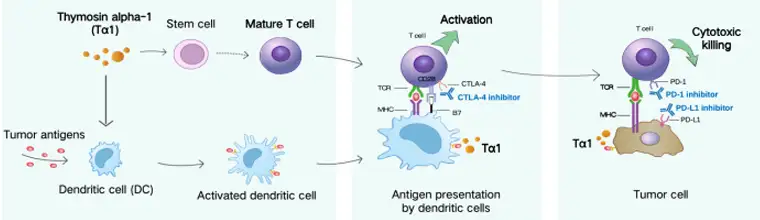
① Promotes T-cell maturation and functional recovery
Thymosin alpha-1 promotes the maturation, differentiation, and functional restoration of T lymphocytes, helping patients maintain cellular immune competence and providing support for postoperative recovery, tolerance to radiotherapy and chemotherapy, and subsequent treatments.
② Enhances immune recognition of abnormal cells
Thymosin alpha-1 is involved in antigen presentation and MHC-I expression processes, enabling the immune system to more effectively detect abnormal cells and allowing T cells and other immune cells to participate more efficiently in immune responses.
③ Improves the tumor immune microenvironment
Some tumors exist within an immunosuppressive microenvironment that limits immune cell activity. Thymosin alpha-1 may help improve the local immune environment by modulating macrophage and T-cell responses, creating more favorable conditions for combination therapies such as immunotherapy and oncolytic virus therapy.
④ Restores and maintains immune balance
Thymosin alpha-1 does not overstimulate the immune system but helps maintain a relatively stable and coordinated immune state, reducing the impact of infections, delayed recovery, and physical decline on treatment planning.
Thymosin alpha-1 participates in T-cell–related immune regulation
6. Frontline research: combination exploration of thymosin alpha-1 with immunotherapy and oncolytic viruses
Thymosin alpha-1 is not only used for basic immune support, but is also being investigated in combination with PD-1/PD-L1 inhibitors, oncolytic viruses, and other therapeutic modalities. Its role is not to replace these treatments, but to provide a stronger immunological foundation by improving T-cell function, antigen recognition, and the tumor immune microenvironment.
For patients with complex malignancies, the significance of such combination strategies lies in two aspects: on one hand, improving treatment tolerance, and on the other, helping the immune system better sustain and amplify the antitumor responses induced by immunotherapy or oncolytic viruses. Whether such approaches are appropriate must be determined individually, based on cancer type, disease stage, prior treatments, and immune status.
7. Why choose Jinshazhou Hospital of Guangzhou University of Chinese Medicine?
When cancer treatment enters a complex stage, patients often need more than a simple “switch of medication”; they require a comprehensive re-evaluation of the entire clinical situation. Some international patients may have already received standard treatment in their home countries, yet still face limited treatment options, long waiting times, reduced treatment tolerance, or difficulties integrating multiple therapeutic approaches.
Jinshazhou Hospital of Guangzhou University of Chinese Medicine has established a multidisciplinary diagnosis and treatment system for cancer patients across different disease stages, and is equipped with advanced oncology platforms, including precision radiotherapy, minimally invasive interventional therapy, ablation therapy, pharmacological treatment, immunotherapy, oncolytic virus therapy, integrative traditional Chinese and Western medicine support, and immune-supportive strategies. For patients requiring multi-stage and multi-modality treatment, the hospital can provide integrated evaluation and coordinated treatment planning within a single clinical system, reducing discontinuity caused by fragmented medical resources.
Regarding immunomodulatory treatments such as Zadaxin, they are not used as isolated therapies but are integrated into the overall treatment plan based on cancer type, stage, pathology, imaging findings, prior treatments, blood parameters, infection risk, and physical condition.
With support from a multidisciplinary expert team (MDT), clinicians focus not only on tumor control, but also on treatment tolerance, side-effect prevention, quality of life, and continuity of care, enabling a more comprehensive, safer, and highly individualized treatment pathway.
Multidisciplinary team (MDT) jointly evaluates and develops personalized treatment plans for patients
8. Treatment process
Zadaxin is a prescription drug. Decisions regarding whether to use it, when to initiate treatment, and how to combine it with other therapies should be made by physicians based on a comprehensive evaluation of the patient’s condition and treatment stage.
① Pre-treatment evaluation:assessment of pathological findings, imaging results, prior treatments, complete blood count, liver and kidney function, and infection-related indicators to determine whether immune support is required.
② Determination of treatment timing:such as pre- and post-surgery periods, during radiotherapy or chemotherapy, and during immunotherapy.
③ Treatment planning:defining the timing of administration, dosing frequency, and treatment duration, as well as evaluating how it should be integrated with other therapies.
④ Monitoring during treatment:regular follow-up examinations and assessment of the patient’s clinical response.
⑤ Adjustment based on outcomes:timely modification of supportive care or the overall treatment plan in case of adverse reactions or abnormal laboratory results.
 + 86 17688273501
 Address
 Email Form
 Language
 English

 Hotline Phone+ 86 17688273501

 Back to Menu