01Which Radiation Therapy Option Is Right for You?
1What are the options if you're unable to tolerate surgery because of your age or heart and lung function?
Precision radiation therapy can be considered. It does not require surgery or anesthesia and leaves no surgical wound. Compared with open surgery, it carries a lower risk of bleeding and generally places fewer demands on cardiopulmonary reserve. It may therefore be considered for patients who are unable to tolerate surgery.
2The cancer has progressed to an intermediate or advanced stage, or even spread to multiple sites. Can local treatment still be considered?
Yes. The role of precision radiation therapy as a local treatment can be assessed based on each patient's condition. Even in intermediate- or advanced-stage cancer with multiple metastases, precision radiation therapy may still be used to target specific lesions, helping control disease and improve treatment outcomes. For multiple brain metastases, advanced technologies such as HyperArc can precisely target and treat multiple lesions of different sizes simultaneously, allowing more efficient treatment with relatively few side effects. For bone metastases, radiation therapy can effectively relieve pain while reducing the risk of complications such as pathologic fractures and nerve compression. For local recurrence after surgery or previous treatment, the specialist team can also assess whether re-irradiation is appropriate. This can help control local disease, support subsequent systemic treatment, and provide additional treatment options for patients with intermediate- or advanced-stage cancer.
3Does a cancer diagnosis always mean the affected organ has to be removed? Can it be preserved whenever possible?
For many cancers, it may still be possible to preserve the organ and its function while pursuing curative treatment. For example, patients with early-stage breast cancer may be considered for breast-conserving surgery combined with radiation therapy, which can achieve outcomes comparable to mastectomy while preserving the appearance of the breast. For head and neck tumors, treatment may aim to preserve functions such as voice and swallowing. For rectal cancer, sphincter-preserving treatment may also be considered. Precision radiation therapy uses highly focused radiation to control the tumor while minimizing exposure to surrounding normal tissues, making it an important option for preserving organ function. Whether organ preservation is possible must be assessed by a multidisciplinary team based on tumor type, stage, and the patient's overall condition.
4I've already had surgery or chemotherapy. Can I still receive radiation therapy?
Yes. Radiation therapy may still be an option. If surgery does not completely clear the disease—for example, in the presence of positive margins or lymph node metastases—postoperative radiation therapy is often considered to further reduce the risk of local recurrence. If local recurrence develops after previous treatment, the team may also assess whether re-irradiation or salvage radiation therapy is appropriate. After a comprehensive assessment, some patients may still be able to achieve local disease control. Previous treatment and the patient's current condition are both important factors in treatment planning, so we recommend an individualized assessment based on complete prior medical records.
5Traveling back and forth is physically exhausting. Could long waiting times delay treatment?
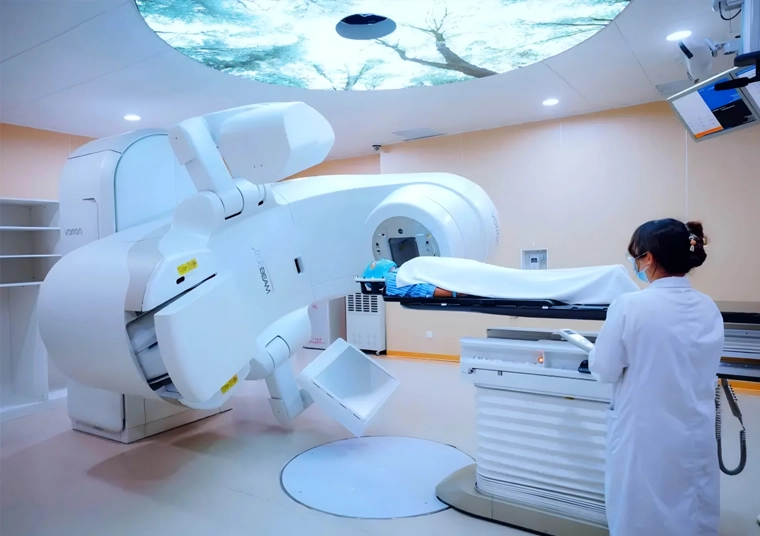
Modern precision radiation therapy usually takes only a few to around 10–20 minutes per session and can often be completed on an outpatient basis without prolonged hospitalization, reducing travel and caregiver burden. Some techniques require only a small number of sessions—for example, stereotactic radiation therapy may be completed in 1–5 sessions—making the overall number of hospital visits more manageable. To minimize waiting times, our hospital is equipped with multiple high-precision radiation therapy systems and uses appointment-based scheduling. We recommend arranging an online consultation and assessment as early as possible so that treatment can begin promptly once the plan is confirmed, helping avoid unnecessary delays.
Has Your Treatment Reached a Bottleneck?
Submit Your Medical Records · Receive an Online Assessment
02Platforms & Technologies
CyberKnife M6
Common Applications: Brain metastases, vestibular schwannoma, spinal tumors, early-stage non-small cell lung cancer, liver cancer, pancreatic cancer, kidney cancer, prostate cancer, and head and neck tumors
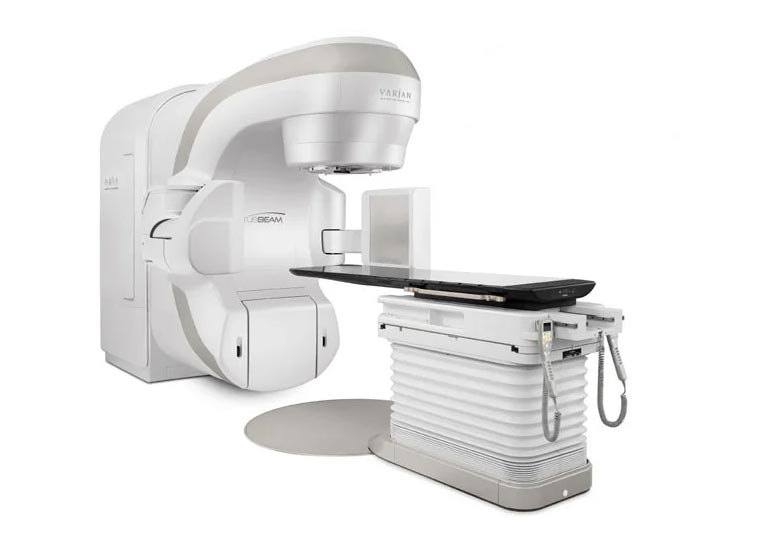
TrueBeam Image-Guided Linear Accelerator
Common Applications: Intracranial tumors, head and neck tumors, lung cancer, breast cancer, prostate cancer, liver cancer, pancreatic cancer, rectal cancer, and esophageal cancer
Halcyon Intelligent Linear Accelerator
Common Applications: Breast cancer, prostate cancer, lung cancer, head and neck tumors, gynecologic tumors, tumors involving the entire central nervous system, and pelvic tumors
TomoTherapy Helical Radiation Therapy System
Common Applications: Whole-brain and craniospinal tumors, multiple brain metastases, long-segment or large-volume tumors, head and neck tumors, nasopharyngeal carcinoma, breast cancer, and thoracic tumors
GammaMedplus iX Brachytherapy System
Common Applications: Cervical cancer, endometrial cancer, prostate cancer, breast cancer, esophageal cancer, lung cancer, skin cancer, and head and neck tumors
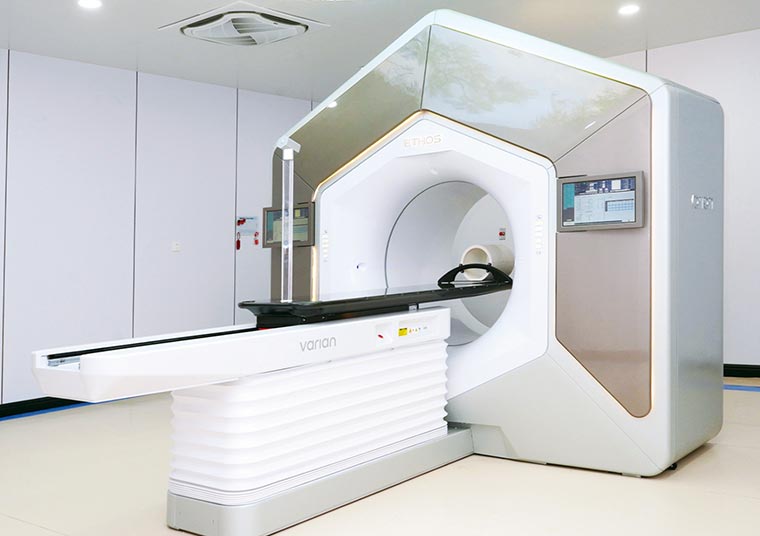
Ethos Linear Accelerator
Common Applications: Prostate cancer, cervical cancer, rectal cancer, lung cancer, liver cancer, pancreatic cancer, head and neck tumors, and tumors adjacent to hollow organs
FreeGS-A Gamma Knife
Common Applications: Vestibular schwannoma, meningioma, pituitary adenoma, cerebral arteriovenous malformations (AVMs), trigeminal neuralgia, epileptogenic foci, and brain metastases
03Experienced Specialist Team
Physicians determine the goals of radiation therapy based on pathology, tumor stage, imaging findings, previous treatment, and the patient's overall condition, carefully balancing tumor treatment with protection of normal tissues.
Wang YimingProfessor / Chief Physician / Master's Supervisor
Specialty:
Experienced in precision radiation therapy for malignant tumors including lung cancer, gastric cancer, ovarian cancer, prostate cancer, kidney cancer, cervical cancer, tongue cancer, lymphoma, esophageal cancer, and intracranial tumors.
Liu YiminProfessor / Chief Physician / Master's Supervisor
Specialty: Specializes in precision radiation therapy for nasopharyngeal carcinoma, oral cancer, breast cancer, and cervical cancer, as well as comprehensive treatment combining radiation therapy, chemotherapy, and hyperthermia, with in-depth research in radiosensitization.
Zhang YanjunChief Physician / Doctor of Medicine / Master's Supervisor
Specialty: Extensive clinical experience in imaging diagnosis and radiation therapy for primary and secondary tumors in both children and adults, particularly in the treatment of pediatric and adult central nervous system tumors and stereotactic radiation therapy.
How Does the Team Balance Tumor Treatment with Protection of Normal Tissues?
Thoracoabdominal Motion Management
4D CT assessment, with respiratory gating or tumor tracking selected when appropriate — The extent and amplitude of respiratory tumor motion are evaluated, and respiratory gating or tumor tracking is selected according to the patient's condition, ability to cooperate, and available technology to minimize the impact of motion on radiation delivery.
Heart Protection for Left-Sided Breast Cancer
Deep Inspiration Breath Hold (DIBH) for suitable patients — By increasing the distance between the heart and the treated chest wall region during deep inspiration, DIBH can help reduce radiation exposure to the heart. Suitability and the actual reduction in heart and lung radiation dose must be evaluated by the treatment team.
Precise Target Definition
Target delineation based on the necessary CT, MRI, PET, and other imaging studies — Physicians select the imaging required for each patient's condition, verify image fusion results, define the treatment target and organs at risk, and evaluate dose distribution.
MDT Multidisciplinary Assessment
Specialists in radiation oncology, surgery, medical oncology, imaging, pathology, and other disciplines jointly evaluate each case, bringing together expertise from multiple fields to develop a more precise, individualized radiation therapy plan.
01
Comprehensive Assessment · Technology Matching
Radiation oncologists, medical oncologists, surgeons, radiologists, and pathologists jointly discuss each case, helping overcome the limitations of single-specialty care and reduce potential bias in clinical decision-making.
02
Comprehensive Assessment · Technology Matching
Eight precision radiation therapy platforms are matched to individual treatment needs, covering intracranial, head and neck, thoracic, abdominal, pelvic, and multiple metastatic targets.
03
One Patient, One Plan · Individualized Treatment
Tumor type, stage, lesion location, and overall physical condition are comprehensively evaluated. Radiation oncologists and medical physicists jointly refine target volumes and radiation doses to develop an individualized radiation therapy plan for each patient.
04
Dynamic Monitoring · Continuous Adjustment
Image guidance and adaptive technologies are used for periodic reassessment throughout treatment. If the lesion volume or patient positioning changes, the radiation therapy plan is promptly optimized.
04Complete Radiation Therapy Workflow
1
Outpatient or Inpatient Radiation Oncology ConsultationApproximately 30 minutes
A radiation oncology specialist reviews the patient's medical history, imaging, and pathology to determine whether radiation therapy is appropriate and establish the initial treatment approach.
2
CT Simulation (CT-SIM)Approximately 30 minutes
Images are acquired in a fixed treatment position using a dedicated wide-bore CT scanner for subsequent target delineation and treatment planning.
3
Treatment Planning by Radiation Oncologists and Medical PhysicistsApproximately 3 business days
The radiation oncologist delineates the tumor target volumes and organs at risk, while the medical physicist optimizes beam arrangement and dose distribution. The individualized treatment plan then undergoes quality assurance verification.
4
Treatment Setup & VerificationApproximately 30 minutes
The patient is repositioned using the immobilization device. CBCT or other image guidance is used to identify and correct setup deviations. Treatment begins only after alignment with the simulation images has been verified.
5
Treatment5–15 minutes per session
Linear accelerator: Radiation is delivered using gantry rotation or arc-based techniques. Treatment is painless, with no sensation from the radiation itself. CyberKnife: The robotic arm tracks the target and delivers radiation from multiple angles, with some treatment courses completed in 1–5 sessions.
6
Recovery & Follow-UpFollow-up at 1 / 3 / 6 months
Nurses provide care and collect symptom feedback throughout treatment. After discharge, follow-up examinations are scheduled at 1, 3, and 6 months to monitor treatment response and side effects over the long term.
Has Your Treatment Reached a Bottleneck?
Submit Your Medical Records · Receive an Online Assessment
05Clinical Practice & Treatment Cases
Supported by advanced equipment and an experienced specialist team, our Radiation Oncology Department continues to provide precise and safe radiation therapy for patients across China and from overseas. Our clinical experience and treatment capabilities are reflected in real-world treatment data. The following figures summarize our hospital's radiation therapy activity in 2025:
11,484
Number of Patients Receiving Radiation Therapy
4591
CyberKnife Treatments
27300
Respiratory-Gated Radiation Therapy Treatments
716
Adaptive Radiation Therapy Treatments
Behind every patient is a unique and difficult journey through cancer treatment. The following cases document patients' experiences at our hospital from diagnosis and precision radiation therapy through interim recovery, and are intended to offer reassurance and a useful reference for those facing similar challenges.
Brain Metastases from Lung Cancer
Lung Cancer with Brain Metastases · 61-Year-Old Male
Challenges Before Treatment
After diagnosis, the patient underwent right pneumonectomy with lymph node dissection at a local hospital on February 14, 2025. Following surgery, he developed collapse and deformity of the thoracic cage with severe postural imbalance. With only one lung remaining, his pulmonary function declined dramatically: even slow walking on level ground caused chest tightness and shortness of breath. He also experienced persistent generalized aches and pain and severe fatigue, with markedly impaired immune function and recurrent respiratory infections, and his daily activities were significantly limited. Six months after surgery, follow-up PET-CT revealed a left frontal lobe brain metastasis and multiple bone metastases throughout the body. Subsequent follow-up examinations showed continued fluctuations in the disease course. In April 2026, brain MRI demonstrated multiple new intracranial metastatic lesions with severe peritumoral edema. Meningeal metastases involving the cerebellar region caused neural compression, resulting in numbness and weakness of the right hand and complete inability to raise the right arm as the disease continued to worsen.
Precision Radiation Therapy Plan
HyperArc precision cranial radiation therapy
Interim Results: Radiation therapy began in May 2026. After the sixth treatment, numbness in the right hand was significantly relieved. By the ninth treatment, the previously weak and restricted right arm could be raised freely and moved normally. On June 4, 2026, the full course of cranial radiation therapy was successfully completed. Follow-up brain CT showed that the intracranial metastases had decreased significantly in size compared with pretreatment, cerebral edema was well controlled, and symptoms caused by neural compression were greatly relieved.
Breast Cancer with Bone Metastases
Breast Cancer with Bone Metastases · 44-Year-Old Female
Challenges Before Treatment
When the patient arrived at our hospital in February 2026, examination showed that the largest lesion in the right breast measured approximately 3.1 × 1.9 × 2.7 cm. Bone metastases from breast cancer had caused persistent and severe pain involving the thoracic and lumbar spine. She experienced severe pain in the chest and back; turning over in bed, getting up, and walking were all painful, making even basic daily activities difficult. Her pain score reached NRS 7–9. According to her family, she had previously been evaluated at another hospital and was told that her disease had reached the terminal stage and that no effective treatment options were available. As the pain progressively worsened, she became almost completely bedridden and unable to care for herself.
Precision Radiation Therapy Plan
Precision radiation therapy to the bone metastases using a TrueBeam linear accelerator
Interim Results: Radiation therapy began on February 10, 2026. By the fifth to sixth treatment, she was gradually able to sit up independently despite previously being bedridden, and her cancer pain had decreased significantly. During the later stage of radiation therapy, she gradually regained the ability to get out of bed and move around, with marked improvement in her overall energy and well-being. As her pain decreased and mobility improved, she became able to move independently around the ward, with markedly better mobility than at admission.
Has Your Treatment Reached a Bottleneck?
Submit Your Medical Records · Receive an Online Assessment
06Transparent End-to-End Services
1
Online / Telephone Consultation
Submit Medical Records · Preliminary Specialist Assessment
2
Hospital Admission Appointment
Dedicated Vehicle Transfer · Assistance with Admission Procedures
3
MDT Consultation + CT Simulation
Multidisciplinary Treatment Planning · Immobilization and Simulation Imaging
4
Target Delineation · Plan Verification
Physician Target Contouring · Medical Physicist Dose Optimization and Quality Assurance
5
Precision Radiation Therapy + Follow-Up
Image-Guided Correction Before Each Treatment · Regular Follow-Up After Discharge
🌏 Professional Medical Interpreter Support
🚗 Dedicated Airport / High-Speed Rail Station Transfer
📋 Transparent Medical Fees · Itemized Costs Available for Review
💬 Visa / Hospital Admission Assistance
07Frequently Asked Questions from Families
Q:What should I prepare before radiation therapy?
For your first consultation, we recommend bringing complete previous medical records so that physicians can evaluate your condition efficiently: pathology reports, recent operative records, previous imaging studies such as CT, MRI, and PET films or discs, recent blood test results, and a list of current medications. Patients traveling from other cities or overseas should organize these materials in advance to help reduce unnecessary repeat examinations. Before radiation therapy begins, patients usually undergo simulation, including preparation of an individualized immobilization device and planning CT, as well as necessary assessments such as cardiopulmonary function and complete blood count. Some treatment sites may also require specialized imaging for target delineation. Specific examinations are determined by the physician according to the patient's condition and treatment site. Some tests may require fasting, so we recommend confirming the requirements with the treatment team before your visit.
Q:Is hospitalization necessary for radiation therapy? How long does a treatment course usually take?
Most conventional external beam radiation therapy can be completed on an outpatient basis without hospitalization. Hospital admission may be recommended for patients in poor physical condition, those receiving concurrent chemoradiotherapy, those experiencing significant adverse reactions, or those undergoing internal radiation therapy such as brachytherapy. Definitive radiation therapy usually lasts about 5–7 weeks, postoperative adjuvant radiation therapy about 4–6 weeks, and palliative radiation therapy about 2–3 weeks. Stereotactic radiation therapy may require only a few to just over ten sessions, with each radiation delivery lasting only a few to around 10–20 minutes. Treatment should not be interrupted without medical guidance. For international patients, we coordinate the schedule according to treatment duration, physical recovery, and visa validity, planning simulation, treatment planning, and radiation delivery in advance to minimize unnecessary waiting outside the hospital.
Q:Will I expose my family to radiation after radiation therapy?
After most radiation therapy treatments, patients do not emit radiation and can safely interact with others. In external beam radiation therapy, the radiation is generated by the treatment machine and stops immediately when treatment ends. No radiation remains in the patient's body, so patients can return home and interact normally with family members, older adults, and children without concern about exposing them to radiation. Only a small number of patients receiving internal radiation treatments, such as radioactive seed implantation or brachytherapy, may have a radioactive source inside the body. In these cases, physicians will provide specific radiation protection requirements and precautions, which should be followed for the period advised by the treatment team.
Q:Are the side effects of radiation therapy severe?
With modern precision radiation therapy, side effects are generally manageable, and most can be relieved. Radiation therapy is a local treatment, so side effects occur mainly in the irradiated area and vary considerably between individuals; not everyone develops severe reactions. Common effects include skin redness, dryness, and fatigue. Reactions also vary according to the treatment site—for example, head and neck radiation therapy may cause dry mouth, while chest radiation therapy may cause discomfort when swallowing. Most adverse effects gradually improve after radiation therapy is completed. Physicians assess risks in advance and provide appropriate symptomatic and supportive treatment to reduce discomfort.
Q:Can radiation therapy and chemotherapy be given at the same time?
Radiation therapy and chemotherapy can be given at the same time. Radiation therapy is primarily a local treatment, targeting cancer cells within a specific area of the body. Chemotherapy, by contrast, is a systemic treatment given orally or intravenously, allowing anticancer drugs to circulate throughout the body and target potential cancer cells wherever they may be present. For some intermediate- and advanced-stage cancers, concurrent chemoradiotherapy may be used to enhance treatment effectiveness and, in selected cases, improve the likelihood of disease control or cure.
Q:How soon should I have follow-up examinations after treatment, and what do they include?
Regular follow-up is generally recommended after radiation therapy to monitor recovery and detect early signs of recurrence or metastasis. The first follow-up is commonly scheduled about one month after treatment, followed by every 3–6 months depending on the patient's condition; once the disease is stable, the interval may gradually be extended. The exact schedule is determined by the physician according to tumor type, stage, and treatment plan. Follow-up generally includes a physical examination, serum tumor markers, and imaging of the primary tumor site, such as CT, MRI, or PET-CT. Endoscopy or bone scans may also be performed when necessary. If new pain, persistent discomfort, or significant weight loss develops, patients should contact the treatment team promptly rather than waiting for the next scheduled appointment.
 + 86 17688273501
 Address
 Email Form
 Language
 English


 Hotline Phone+ 86 17688273501


 Back to Menu