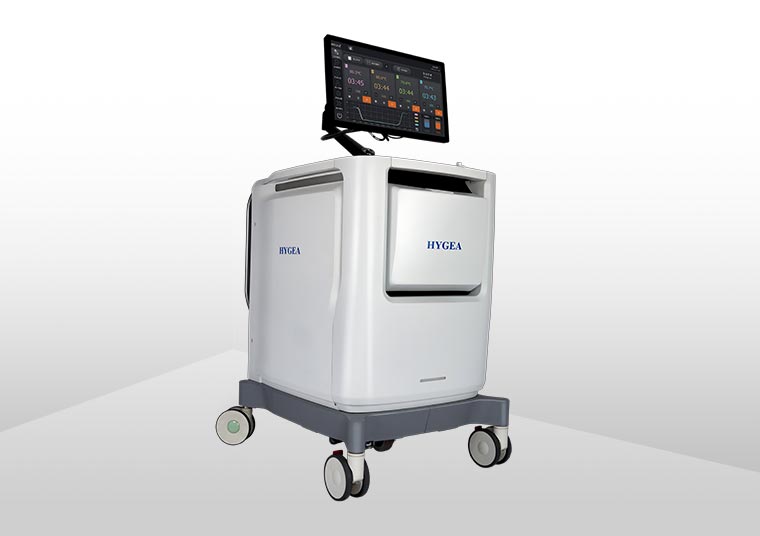
Combined Cryo-Thermal Ablation System: A Minimally Invasive Local Treatment Option for Various Solid Tumors
When localized lesions require minimally invasive intervention, clinical practice is not limited to conventional cryoablation or thermal ablation as standalone approaches. Under imaging guidance, a combined cryo-thermal ablation system enables the ablation probe to be precisely inserted into the target area, where localized treatment is achieved through sequential freezing and rewarming cycles. The Kangbo Knife system introduced by Jinshazhou Hospital of Guangzhou University of Chinese Medicine belongs to this category of devices. Its core features include phase-change refrigeration, vacuum thermal insulation, and a complete cryo-thermal cycling process, allowing it to be applied in the local ablation of various solid tumors.
1. Broad Coverage Across Various Solid Tumors with Wider Clinical Applicability
The Kangbo Knife is primarily used for the local ablation of solid tumors. Common clinical applications include lung cancer, liver cancer, pancreatic cancer, renal cancer, prostate cancer, breast cancer, as well as bone and soft tissue--related tumors. For lesions requiring local control, for patients who are temporarily unsuitable for conventional surgical resection, or for those seeking to minimize procedural trauma as much as possible, this type of device may serve as one of the available treatment options.
2. Continuous Freezing and Rewarming for More Comprehensive Local Treatment
One of the core features of the Kangbo Knife is its ability to complete both the freezing and rewarming phases within a single treatment session. After reaching the target temperature, continuous freezing can be maintained; once the freezing phase is completed, the system proceeds into the rewarming stage, thereby forming a complete freeze--thaw cycle, which may be repeated according to the characteristics of the lesion. During Kangbo Knife treatment, freezing temperatures can reach as low as -196°C, while rewarming temperatures may reach up to 85°C. One freezing phase combined with one rewarming phase constitutes a complete cycle, which is generally repeated 1 to 3 times. The nearly 300°C temperature differential between extreme cold and heat also allows the overall ablation process to be carried out more thoroughly.
3. Higher-Efficiency Phase-Change Refrigeration Enables Broader Ablation Coverage
The Kangbo Knife utilizes phase-change refrigeration technology, allowing rapid cooling to -196°C with stronger cooling capacity, higher freezing efficiency, and a larger freezing range. For lesions with relatively large volume, deeper anatomical location, or cases requiring more extensive local coverage, this type of system can provide stronger technical support for local ablation procedures.
4. High-Intensity Rewarming with Simultaneous Needle Tract Management for More Comprehensive Post-Procedural Control
An important distinction between combined cryo-thermal ablation and conventional cryoablation systems lies not only in the freezing process itself, but also in the management performed at the conclusion of treatment. Following freezing, the Kangbo Knife is capable of performing rewarming at 85°C. This is not only part of the treatment process itself, but is also closely related to needle tract management. For patients, completion of lesion treatment is only one aspect of the procedure; needle tract management is equally important. High-intensity rewarming helps enhance post-ablation needle tract management and may, to a certain extent, reduce the risks of needle tract bleeding and implantation metastasis, thereby making the overall treatment process more complete during its final stage.
5. More Thorough Vacuum Thermal Insulation for Reduced Impact on Surrounding Tissues
Another key feature of the Kangbo Knife is its protection of the tissues surrounding the lesion. The shaft of the ablation probe achieves vacuum thermal insulation through a 0.1 mm inter-wall spacing, while both the probe shaft and connecting tubing remain thermally insulated except at the active treatment area. This design helps minimize additional impact on normal tissues, the skin, and the puncture pathway. Particularly in cases where lesions are adjacent to critical anatomical structures, where puncture distances are relatively long, or where surrounding anatomical relationships are complex, this design is more conducive to protecting nearby tissues.
6. Multiple Treatment Approaches for Better Adaptation to Lesion Location
The Kangbo Knife is not limited to a single puncture approach and may also be applied in precise percutaneous puncture procedures, open surgery, and endoscopic or laparoscopic interventions. Physicians may select a more appropriate treatment approach according to lesion location, exposure conditions, and the overall treatment plan. For lesions in which percutaneous puncture is limited, lesions located in anatomically challenging positions, or cases requiring integration with other surgical procedures, the availability of multiple treatment approaches provides greater convenience for clinical planning and allows treatment strategies to better match the patient's actual condition.
7. Closer Integration Within the Diagnostic and Treatment Process for Smoother Overall Care Planning
The Kangbo Knife is not only suitable for local ablation, but can also be more easily integrated into a comprehensive diagnostic and treatment pathway. In the management of certain pulmonary lesions, combined cryo-thermal ablation may be performed simultaneously with needle biopsy, thereby reducing additional procedures and repeated punctures. For patients who also require surgery, systemic drug therapy, radiotherapy, or other interventional treatments, the system can likewise be incorporated more conveniently into the overall treatment strategy.
For patients, the greater value lies not merely in having an additional device option, but in enabling examinations, diagnosis, local treatment, and subsequent therapies to be connected as smoothly as possible, while achieving a more appropriate balance among lesion management, needle tract management, and protection of surrounding tissues. Jinshazhou Hospital of Guangzhou University of Chinese Medicine provides one-stop diagnostic and treatment services for international patients, allowing examinations, treatment, and subsequent care arrangements to proceed in a more coordinated and streamlined manner.
 + 86 17688273501
 Address
 Email Form
 Language
 English

 Hotline Phone+ 86 17688273501

 Back to Menu